 WeeklySA_Admin
GRAFT: City officials face scrutiny as investigators demand multimillion-rand procurement records amid claims of cartel-linked corruption crippling service delivery…
By Monk Nkomo
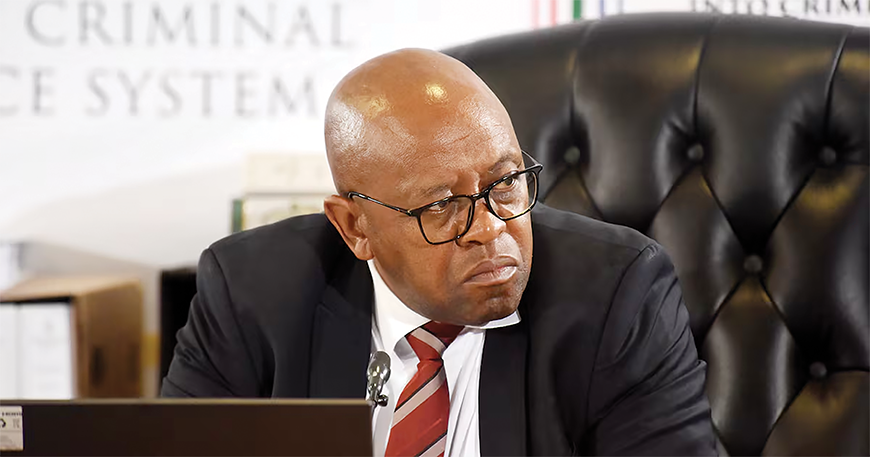
The Madlanga Commission of Inquiry has set its sights on the City of Johannesburg, demanding access to documents linked to multimillion-rand tenders amid mounting allegations of cartel-driven corruption and procurement irregularities.
The move marks a significant escalation in efforts to expose and root out corruption within South Africa’s struggling municipalities.
This week, the Commission formally requested tender-related records from the city following a series of complaints — most notably from the Democratic Alliance (DA) and ActionSA — alleging widespread irregularities across several key municipal entities.
These include the Johannesburg Metropolitan Police Department (JMPD), Johannesburg Water, City Power, the Johannesburg Roads Agency, the Johannesburg Property Company, as well as a range of controversial security contracts.
At the centre of the allegations is the claim that a well-organised “cartel” has been exerting control over lucrative tenders in the city, manipulating procurement processes and channelling contracts to politically connected individuals and companies.
If proven, the implications are severe.
Testimony already heard at the Commission has painted a troubling picture of systemic corruption in neighbouring metros, including Ekurhuleni and Tshwane, where alleged tender rigging and related criminal activities have led to the suspension — and in some cases arrest — of senior officials.
The inquiry is now expected to determine whether similar patterns exist in Johannesburg.
Opposition parties argue that the stakes go far beyond governance — and strike at the heart of service delivery.
According to the DA, irregular procurement practices have contributed directly to the deterioration of essential services, as funds intended for infrastructure and community development are diverted through corrupt channels.
In a bid to force accountability, the party has escalated the matter to the Special Investigating Unit (SIU), describing Johannesburg’s procurement system as “broken” and vulnerable to systematic abuse.
The DA is also pushing for a broader probe into specific high-value contracts, including multimillion-rand water tanker agreements and security tenders, which it claims may have been fraudulently awarded — in some cases to entities linked to councillors.
Led by caucus leader Belinda Kayser-Echeozonjoku, the party has called for a full-scale investigation into major city entities, warning that unchecked corruption is accelerating the collapse of municipal governance.
“These irregularities are not merely technical breaches,” the DA has argued. “They point to a deliberate effort to loot public resources at the expense of residents.”
ActionSA, which has also raised concerns about procurement practices, has found itself drawn into the controversy.
Testimony at the Commission has implicated a senior party member and Tshwane MMC, Kholofelo Morodi, in alleged tender-related misconduct. Morodi has since been expelled from the party following an internal investigation.
While the Madlanga Commission has yet to announce a formal start date for its Johannesburg probe — or identify specific officials under investigation — the demand for documents signals that the city is firmly in its crosshairs.
The developments come against the backdrop of a deepening national crisis in local government.
Across South Africa, municipalities are buckling under the weight of financial mismanagement, corruption and governance failures. Recent assessments suggest that more than 40 municipalities have effectively collapsed, while over 150 others are on the brink.
Many are technically insolvent, unable to meet financial obligations, maintain infrastructure or deliver basic services.
Government has repeatedly pledged to stabilise the sector by appointing skilled professionals and strengthening oversight mechanisms.
But experts warn that such efforts will struggle to gain traction unless corruption — particularly in procurement — is decisively confronted.
For residents of Johannesburg, the outcome of the Commission’s inquiry could prove pivotal.
At stake is not only accountability, but the restoration of basic services — from water and electricity to roads and public safety — that millions depend on daily.
As the investigation gathers momentum, the question is no longer whether corruption exists within municipal systems, but how deeply it runs — and who will ultimately be held responsible.
MIRROR Briefs
BATOHI WITHDRAWS FROM PROBE
The former National Director of Public Prosecutions (NDPP) Shamila Batohi has withdrawn from the Nkabinde Commission of Inquiry citing procedural fairness concerns and challenges to her credibility. At the centre of Batohi’s withdrawal is a dispute over legal representation during cross-examination. She said she required proper consultation with her attorneys while being questioned and believed that continuing without that support would be unfair. Batohi also raised concerns about how the inquiry was treating her credibility.
In a written statement delivered through her legal team, she said the decision had been carefully considered and was not made lightly.
Her position signals a deeper concern often raised in commissions and inquiries across South Africa: whether processes designed to uncover truth are also protecting the rights of those called to testify. While acknowledging the importance of the inquiry’s mandate, Batohi indicated that the circumstances of the proceedings had made her continued participation untenable.
“As a matter of constitutional principle and procedural fairness, it would have been appropriate to allow Harris Nupen Molebatsi Attorneys (HNM) to consult with me… This is regrettably not possible in the light of the decision of the panel,” Batohi stated. – Lehlohonolo Lehana.
R85M BORDER WALL TENDER SET ASIDE
The Special Tribunal has set aside the R85 million tender for the construction of a concrete barrier wall along the KwaZulu‑Natal and Mozambique border. According to the Special Investigating Unit which probed the contract, the tender was awarded to the ISF Shula Joint Venture and commissioned by the KZN Transport Department.
“The wall was commissioned…in response to community concerns about rampant cross-border crime, particularly the smuggling and trafficking of stolen and hijacked vehicles into Mozambique.
“Instead of delivering on this urgent public safety measure, the Joint Venture submitted fraudulent documents, failed to meet mandatory requirements and left the project incomplete despite receiving R84 million,” the SIU said in a statement. The corruption busting unit investigated the tender and found:
• Only 5.29km of the planned 8km wall was erected, forcing the department to tender for another company to complete the wall at an additional cost of R62 million;
• A fraudulent B-BBEE certificate was used to secure the tender;
• An expired Letter of Good Standing;
• Non-compliance with financial capacity requirements.
“The Tribunal’s ruling underscores the constitutional imperative that government procurement must be fair, transparent, competitive, and cost‑effective. The SIU will now pursue recovery of the monies paid, ensuring that public funds are restored to the state’’.- SAnews
BLOW FOR PHALA PHALA ACCUSED
The Modimolle Regional Court has dismissed Section 174 discharge application brought by the three individuals accused of stealing 580 000 US dollars at Phala Phala farm in Limpopo.
Imanuwela David along with siblings Froliana and Ndilinasho Joseph are standing trial for burglary at President Cyril Ramaphosa’s farm in 2020. Magistrate Peter Manthata rejected the application, ruling that sufficient evidence existed for all three to answer the charges against them.
“Considering the principles laid down in the above cases, I find that Accused 2 and 3 also have a case to answer,” the magistrate said.
“The application by Accused 1, 2 and 3 for discharge in terms of Section 174 of the Criminal Procedure Act, 51 of 1977 is dismissed.”
The Phala Phala saga began in June 2022 when criminal charges were laid against Ramaphosa and members of his security detail.
The state has called 22 witnesses and presented evidence including cellphone records and mapping data to place the accused at the scene. A cellphone data analyst testified on communications and locations around the time of the theft, associating numbers with the suspects through technical methods. – Lehlohonolo Lehana.
STATE OPPOSES BAIL FOR EMPD BOSS
The suspended EMPD deputy chief Julius Mkhwanazi and city manager Kagiso Lerutla will spend the long weekend behind bars after their bail judgment adjourned until Tuesday, 28 April 2026. They made their third appearance in court on Friday following their arrest over the weekend.
The pair are accused of multiple charges relating to a 2019 incident where Mkhwanazi and Lerutla allegedly conspired to keep the latter’s identity off the criminal record system. Bail arguments concluded with the State insisting their release would not be in the interest of justice.
The State also told the court that Lerutla was involved in a fatal traffic incident, where he is accused of crashing into another vehicle, resulting in the death of the driver. The State claims he later paid a tow truck driver to dispose of the body. Prosecutor Advocate Nceba Mtelwa argued that the extent to which the accused went to conceal their crimes demonstrated why they should remain in custody pending trial. The docket for that case went missing, with the State currently in the process of reconstructing the docket. Additionally, an affidavit deposed by the murdered Marius van der Merwe – Witness D – alleged that EMPD members and private security officers murdered a man April 2022 at the behest of Mkhwanazi.