 WeeklySA_Admin
REALITY: Democracy promised change—yet poverty’s face remains the same after all these years. If only the symbols change while the structures stay intact, what exactly is South Africa celebrating?…
By Themba Khumalo
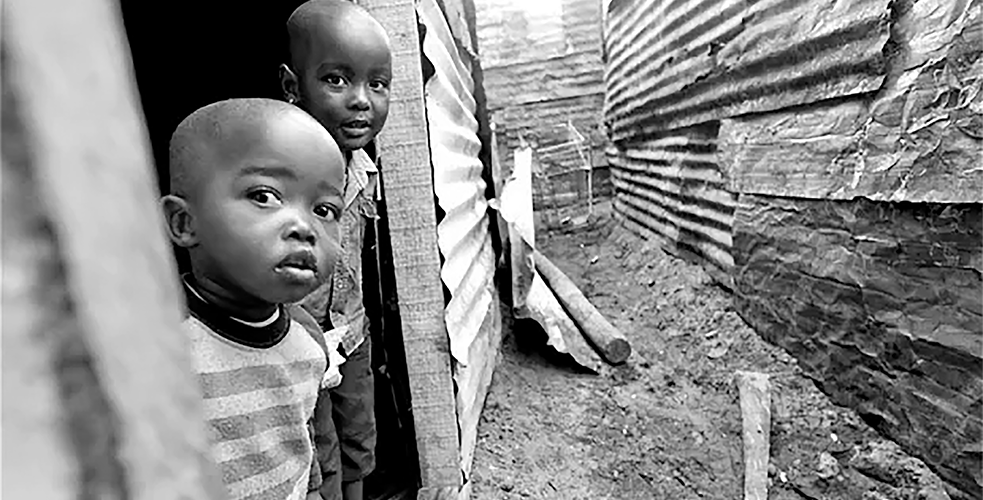
Before sunrise at the edge of Khayelitsha, hundreds of men and women gather along muddy roads, clutching worn-out lunch boxes and tormented hope, waiting for the chance of a day’s work. Behind them, the corrugated iron shacks of the township sprawl across the landscape—a daily reminder that, for millions of black South Africans, democracy has not dismantled the poverty inherited from apartheid.
This scene is not unique. Across the country, townships and rural villages tell the same story: communities still trapped in the economic patterns of the past, even as the nation celebrates decades of freedom. It is here, far from the stages of official speeches and commemorative events, that the true state of transformation is revealed.
Yet while these realities persist in the shadows, the nation has perfected a peculiar public performance: speaking endlessly about transformation, celebrating glossy symbols of progress, while leaving intact the very economic architecture that made transformation necessary in the first place.
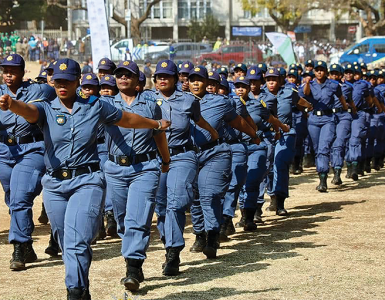
On 27 April, the country celebrated thirty-two years of democracy with glossy speeches, commemorative slogans and carefully staged declarations about progress. Yet beyond the conference halls, beyond the polished government advertisements and corporate diversity campaigns, millions of black South Africans continue to live inside a brutal economic continuity that apartheid would recognise instantly.
Poverty in South Africa remains overwhelmingly black.
This is not rhetoric. It is a statistical fact.
Black South Africans continue to carry the heaviest burden of unemployment, underemployment, food insecurity, inadequate schooling, overcrowded public healthcare, collapsing municipal infrastructure and violent economic exclusion.
Consider the numbers: in 2024, over 64% of young black South Africans were unemployed, compared to just 10% of their white counterparts. Black households are four times more likely to experience hunger, and nearly 90% of informal settlement residents are black.
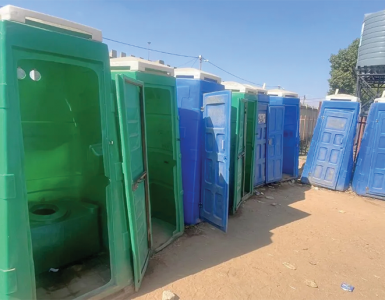
The geography of suffering still follows the old apartheid map with chilling precision. The townships remain poor. Informal settlements continue to swell. Rural black communities remain structurally abandoned. Wealth, meanwhile, remains concentrated in spaces historically reserved for white privilege and post-apartheid elite accumulation.
The country changed its flag. It did not fundamentally change ownership.
South Africa today suffers from a convenient national dishonesty: the insistence on discussing poverty as though it emerged naturally, like bad weather, rather than as the direct inheritance of engineered racial dispossession.
The economy did not accidentally become unequal. It was deliberately constructed to produce cheap black labour, suppressed black ownership, inferior black education and spatial exclusion.
Apartheid was not merely political tyranny. It was an economic design project.
And like all systems built carefully over centuries, its consequences did not evaporate in 1994.
The numbers expose the deception with embarrassing clarity. Black South Africans remain disproportionately represented among the unemployed and working poor. They remain the overwhelming majority of those dependent on failing public services. They remain the demographic most vulnerable to hunger, informal work and educational collapse. Even where a black middle class has expanded, the broader structural imbalance remains grotesque.
A tiny elite of blacks now lives behind electric fences while millions survive inside an economy that treats human dignity as a luxury item.
What makes this crisis even more obscene is the moral cowardice with which South Africa discusses it. The moment race and economics are connected honestly, the conversation is abruptly sanitised. Suddenly, everyone wants “nuance”. Suddenly, historical clarity becomes “divisive”. Suddenly, the descendants of structural beneficiaries become deeply uncomfortable with statistics.
But facts are not racial hatred.
Acknowledging that poverty remains disproportionately black is not an attack on white South Africans. It is an acknowledgement of measurable reality. Refusing to confront that reality does not create social cohesion. It merely protects comfort.
Equally dishonest is the attempt by parts of the political class to weaponise black suffering while reproducing it. Over three decades, the governing elite mastered the language of liberation while often governing with astonishing mediocrity and predatory self-interest.
Corruption hollowed out institutions that black communities depend on most. Municipal collapse, deployment of ill-equipped cadres (loyalty over skill), failed infrastructure, collapsing schools and looted public funds have deepened the misery of people who were already historically disadvantaged. The tragedy is that apartheid built the unequal foundation, but democratic incompetence helped cement it.
The stakes are not theoretical. South Africa’s persistent inequality is a time bomb: widespread protests, xenophobic violence, and growing political alienation all trace their roots to the daily indignity of economic exclusion. The fabric of our democracy frays each time another young graduate is left idle, each time a hungry child is told to be patient.
South Africa, therefore, sits inside a dangerous contradiction. It is one of the most unequal societies on earth, yet public discourse increasingly demands emotional dishonesty about inequality. Citizens are encouraged to celebrate symbolic progress while material deprivation expands around them. The poor are told to be patient while billionaires multiply. Young black graduates are told education is the answer, while the economy cannot absorb them. Entire communities are expected to survive indefinitely on resilience, dignity and motivational speeches.
Resilience has become the narcotic language of societies unwilling to deliver justice.
And still, there remains an almost religious resistance to confronting wealth concentration honestly. South Africa speaks constantly about poverty but far less about accumulation. It analyses unemployment endlessly but avoids discussing ownership patterns with equal seriousness. It debates crime obsessively while ignoring the economic despair that fertilises instability.
We are invited to discuss symptoms — crime, unrest, “service delivery protests” — but rarely the structure that produces them. This polite conversation is itself a tool of preservation.
This is why racial tension persists beneath the surface of public life. Not because black South Africans are uniquely resentful. Not because social media amplifies outrage. But because millions live daily with visible inequality that maps almost perfectly onto historical racial hierarchy. People can see who has wealth, security, functioning schools, medical aid and generational assets. They can also see who does not.
A democratic flag cannot permanently conceal an undemocratic economy.
None of this means blackness is synonymous with helplessness, nor that all white South Africans are wealthy. Reality is more complex than slogans. But complexity must never become a tool for evading dominant truths. The dominant truth is that race and poverty remain deeply intertwined in South Africa. Any serious national conversation that pretends otherwise is intellectually fraudulent.
The greatest danger facing South Africa is not that citizens are speaking too much about race and inequality. The real danger is that the country has normalised them. Hunger no longer shocks. Informal settlements no longer horrify. Youth unemployment no longer triggers a national emergency. The abnormal has become ordinary.
And perhaps that is the final indictment of post-apartheid South Africa: not merely that poverty still has a colour, but that the country has become disturbingly accustomed to seeing it.
So here is the question for South Africa’s leaders, and for every citizen who cares about the soul of this democracy: Will you settle for a country that changes its symbols while leaving its structures untouched? Or will you demand the justice that transformation truly requires?