 WeeklySA_Admin
INCIDENCE: Health authorities are tracing contacts after two Hantavirus cases linked to a South American cruise ship were detected in South Africa, but experts insist the virus is not easily spread between people and should not be compared to Covid-19…
By Ina Skosana
Hantavirus is not Covid-19. It is not easily spread; in fact, it’s unusual for the disease to spread from person to person.
This is according to Professor Lucille Blumberg, an infectious disease expert and former Deputy Director at the National Institute for Communicable Diseases (NICD).
“This is not Covid. This [hanta] is a well-described organism. It’s been around for a long time. So there’s a fair amount of information on it,” says Blumberg.
Blumberg’s comments come amidst public concern following news that two cases of Hantavirus were detected in South Africa. Both cases are tourists who were on a cruise from Southern Argentina to the Canary Islands via Cape Verde.
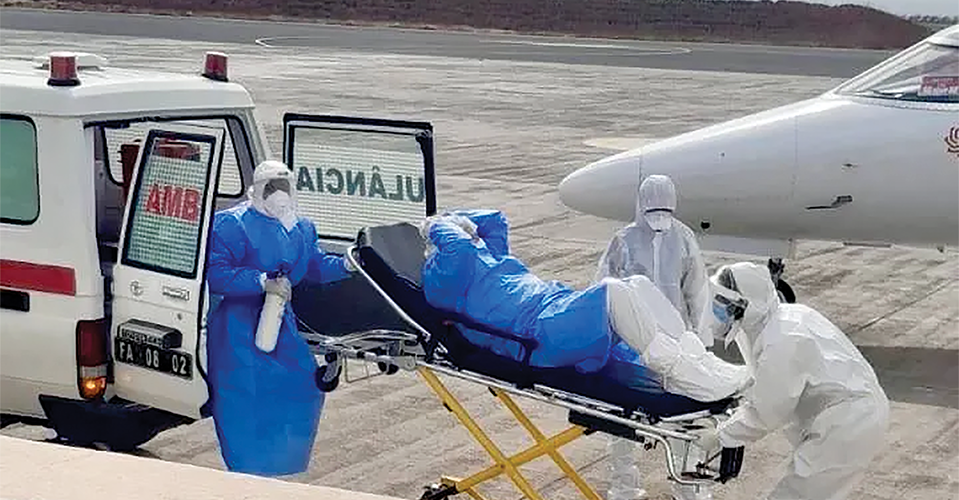
One of the tourists collapsed at OR Tambo International Airport and later died in Kempton Park hospital. The second tourist is receiving treatment at a private hospital in Sandton.
“He was airlifted through a medical chopper, facilitated by his health insurers, the authorities of the ship,” says national health department spokesperson, Foster Mohale. “This is called medical evacuation to the nearest country of their choice, with capacity and infrastructure.”
Mohale stressed that the man’s condition was critical.
People get infected with Hantavirus when they are exposed to the urine and droppings of rodents. Cases are recorded every year in South America, Europe and parts of Asia.
“We’ve not described it in Africa. It’s not been identified in rodents in Africa. We have lots of rodents in South Africa, and they have lots of diseases, but hanta is not one of them,” Blumberg tells Health-e News.
“We have no locally acquired cases. We’re following up close contacts, and there have been no additional cases reported to date in the country,” says Blumberg.
Different strains
Hantavirus is a cluster of viruses with different strains occurring in different parts of the world. These strains also cause different illnesses among people.
“In Asia, it’s often associated with renal [kidney] problems. In South America, it’s associated with pulmonary issues,” Blumberg explains.
There’s no vaccine against this virus and the severity of the illness varies from mild to severe. There is supportive treatment to alleviate symptoms associated with the disease. There are no specific antiviral drugs. It’s estimated that 30 to 50% of people who get infected die.
Blumberg describes the outbreak as a “rare event” as the disease is not typically spread from person to person.
“There have been very few instances, with the South American strain spreading from person to person.”
According to the World Health Organisation (WHO), eight of the 147 passengers and crew on the ship were confirmed to have the South American strain or Andes Hantavirus.
Blumberg suggests that the infections may have occurred onshore. When people are infected with the virus, it may take between five and 45 days for a person to show any signs of illness.
“It was probably acquired by at least one of the people onshore. Many of the tourists travelled in South America for birding,” she explains. “This was in rural environments, likely to have lots of rodents.”
Health authorities, including the national and provincial departments of health, along with the NICD, are conducting contact tracing.
The cruise ship is currently along the coast of Cape Verde. Authorities in the country have reportedly banned it from docking.
Three suspected cases have been evacuated from the ship for treatment in the Netherlands. – Health-e News
MIRROR Briefs
LAWLESS FOREIGNERS WARNED
Minister in the Presidency, Khumbudzo Ntshavheni says government has condemned the circulation of fake videos and images online claiming attacks on foreign nationals in South Africa.
Ntshavheni briefed media on the outcomes of the Cabinet meeting held this week.
There has been a raft of public advisories from some African governments to their citizens, warning them to exercise caution while in South Africa.
She said that, as these advisories are being issued against South Africa, the accompanying discussion should focus on illegal activities by foreign nationals in the country.
“Those who are involved in selling drugs to our children, drug pipelining in our communities and those who are involved in shooting people to enforce Sharia law. There’s no Sharia law in South Africa. You cannot undermine the laws of these countries and want to impose your own laws. Those who want to claim they’re kings in our own country, and you say South Africans must sit quietly. South Africans will not sit quietly. We cannot be undermined in our own country.”
Xenophobia has long been an issue in South Africa and has been accompanied by occasional outbursts of deadly attacks. But the current protests have been largely peaceful with no official reports of accompanying looting of foreign-owned shops or violence against undocumented migrants. – Lehlohonolo Lehana
HEAVY RAINS STOP BURIALS
The Nelson Mandela Bay Municipality says the decision to temporarily suspend burials at several municipal cemeteries following severe rainfall and flooding across the metro is necessary to protect public health, environmental safety and the dignity of the burial process.
In a public notice municipal officials acknowledged the emotional distress and inconvenience caused to grieving families affected by the suspension.
“The municipality wishes to sincerely acknowledge the distress, emotional strain and inconvenience experienced by families affected by the temporary suspension of burials,” said Municipal Crisis Communication spokesperson, Sithembiso Soyaya.
According to the municipality, persistent heavy rainfall had caused extensive waterlogging at several cemetery sites, leaving graveyards unsafe for both mourners and workers.
Officials cited multiple hazards, including saturated graves, unstable soil conditions, flooded access roads and compromised grave integrity.
The municipality also warned of environmental and occupational health risks affecting undertakers, cemetery workers and members of the public.
The municipality said calls for additional pumping interventions would not immediately resolve the situation, explaining that removing standing water alone would not restore the structural stability of the affected cemetery grounds.
“Technical assessments conducted by municipal officials continue to indicate that certain sections remain excessively saturated, posing serious risks of grave collapse, soil displacement and unsafe working conditions,” the statement said. – SAnews
DATE SET FOR “CAT” TRIAL
The trial of Vusimuzi “Cat” Matlala and his co-accused, Musa Kekana, Tiego Floyd Mabusela and Tsakani Matlala is set to commence on 20 July 2026 in the High Court of South Africa, Gauteng Division, Johannesburg.
Matlala appeared in the Johannesburg High Court alongside his co-accused this week. He is facing a string of serious charges, including attempted murder, conspiracy to commit murder, possession of illegal firearms and money laundering.
The court has now postponed the matter to mid-June to allow the defence to bring an application compelling the State to hand over outstanding documents.
Despite this, the court made it clear that the trial will proceed as scheduled.
In court, the presiding judge confirmed that “the indictment is amended, the new and amended indictment has been handed up and is placed in the court file. The trial date remains at 20 July 2026 and is to proceed uninterrupted. This matter is postponed to 15 June, 2026 and possibly 17 June 2026 for the hearing and application by the Defence in respect of documentation to be provided to it by the State.”
The court further ruled that Matlala and two of his co-accused will remain in custody, while others were out on bail under extended conditions. – Lehlohonolo Lehana
SALE OF RDP HOUSES SCAM
KwaZulu-Natal Transport and Human Settlements MEC, Siboniso Duma, has revealed the existence of an alleged sophisticated criminal syndicate operating from within a correctional facility and linked to the sale of RDP houses, including to undocumented foreign nationals.
Duma said the discovery forms part of an initiative aimed at rooting out corruption and irregularities in the allocation of subsidised housing.
According to the MEC, investigators uncovered a case in which a government-subsidised house, intended for a South African beneficiary, was instead occupied by an undocumented Mozambican national.
The individual reportedly possessed only a foreign identity card and lacked a valid passport or legal status document.
In addition, further evidence revealed this house was handed over to the Mozambican national by an unauthorised third party, bypassing the official Housing Subsidy System (HSS) procedures.
“The elite team has identified a prisoner and a traditional leader as masterminds behind this rot. The elite team, which is led by Head of the Department of Human Settlements Max Mbili, is working closely with the Department of Correctional Services and the South African Police Service as part of dismantling the syndicate,” Duma said. – SAnews