 WeeklySA_Admin
INTERVENTIONS: Rising protests against undocumented foreigners, mounting diplomatic pressure and renewed fears of violence have placed South Africa under intense continental scrutiny, while Pretoria argues that unemployment, weak governance across the region and economic desperation lie at the heart of the crisis…
By Lehlohonolo Lehana and foreign news agencies
South Africa is once again confronting uncomfortable questions about xenophobia, migration and economic exclusion after a wave of anti-immigrant protests triggered diplomatic concern across the continent and prompted some African governments to consider emergency interventions for their citizens living in the country.
The growing tensions have drawn in regional leaders, the African Union (AU), the United Nations and foreign governments, exposing the depth of frustration around unemployment, crime and service delivery inside South Africa while also reviving painful memories of previous xenophobic attacks that damaged the country’s standing on the continent.
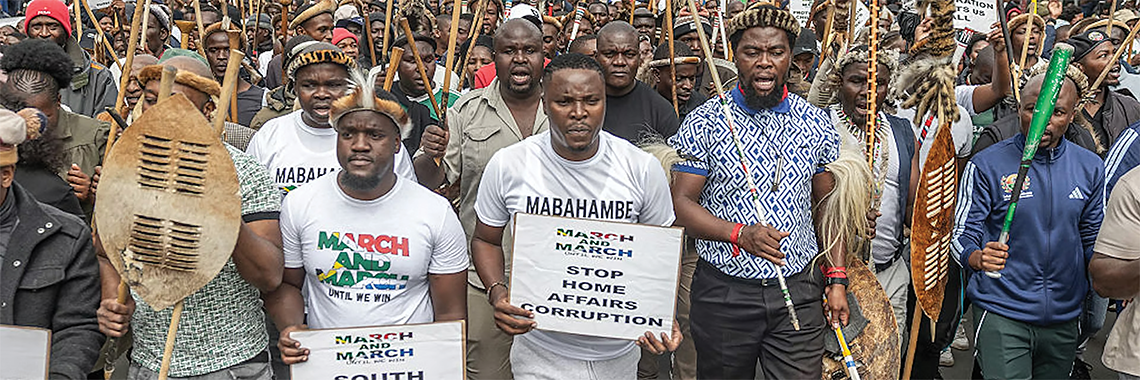
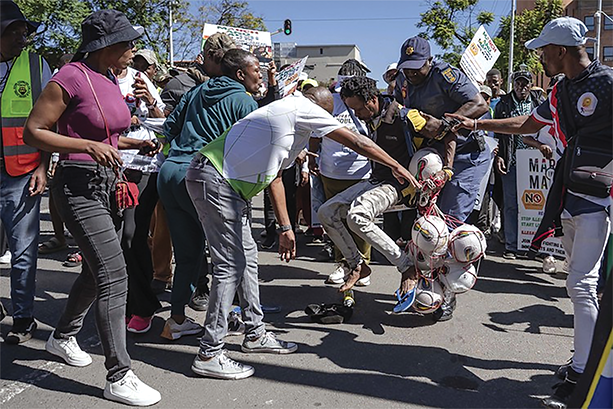
The latest unrest follows demonstrations in Pretoria, Johannesburg and parts of the Eastern Cape, where protesters demanded stronger action against undocumented migrants, accusing foreign nationals of contributing to pressure on jobs, housing, healthcare services and crime.
Migration must be managed through cooperation,
compassion and continental responsibility… – Ronald Lamola
Although the South African government has condemned attacks and intimidation directed at foreign nationals, pressure is mounting on Pretoria to reassure neighbouring countries that African migrants remain safe.
Nigeria says at least 130 of its citizens have already requested repatriation from South Africa following the recent protests.
The applications are the first under a newly introduced Nigerian government repatriation programme launched amid fears that tensions in South Africa could escalate further.
Nigerian Foreign Minister Bianca Odumegwu-Ojukwu said authorities in Abuja were monitoring developments closely, particularly after additional protests were planned in early May. The Nigerian government has already summoned South Africa’s High Commissioner in Abuja to express concern over the situation. Nigeria’s diplomatic missions in South Africa are also working with local authorities to protect Nigerian nationals and reduce risks to communities living in vulnerable areas.
Mozambique has likewise moved swiftly to calm fears among its citizens. The country’s Labour Ministry has dispatched a delegation to South Africa to monitor the treatment and safety of Mozambican workers following reports of growing hostility toward African migrants.
Mozambican officials say the delegation will engage with South African authorities and assess conditions facing migrant workers, particularly in informal settlements where previous outbreaks of xenophobic violence have often erupted.
Misinformation on social media
Mozambique’s government has also accused misinformation circulating on social media of intensifying panic among migrants, warning that misleading videos and false claims were inflaming tensions and spreading fear unnecessarily.
At the diplomatic level, Ghana has escalated the matter to the African Union, requesting a formal debate on irregular migration and the treatment of foreign nationals in South Africa at the AU Mid-Year Coordination Summit in Cairo next month.
The move has embarrassed Pretoria at a particularly delicate moment, with South Africa currently serving as interim chair of the Southern African Development Community (SADC), a position that places the country under added pressure to demonstrate regional leadership and stability.
The United Nations has also weighed in, condemning xenophobic attacks and calling on South African authorities to ensure the safety and protection of all residents regardless of nationality. UN Secretary-General António Guterres urged calm and appealed for restraint as tensions spread across social media and migrant communities.
SA on Ghana’s escalation
South African International Relations Minister Ronald Lamola acknowledged that Ghana’s decision to escalate the matter to the AU was “regrettable,” saying he would have preferred direct bilateral engagement between the countries.
But Lamola also used the moment to argue that the migration crisis facing South Africa cannot be separated from wider political and economic failures across the continent.
“There is a need to deal with the root cause, particularly economic factors that remain important, so we can deal with the issue in a comprehensive manner,” Lamola said.
He stressed that migration pressures are driven by “push factors” such as poor governance, unemployment, instability and economic collapse in some African states, forcing citizens to seek opportunities elsewhere.
Pretoria has signalled that if the AU proceeds with a debate focused solely on xenophobia in South Africa, it will push for broader discussions around governance failures, democracy, rule of law and economic instability across the continent.
Lamola insisted South Africa remained committed to Pan-African solidarity and rejected claims that the government condones attacks on foreigners.
“Our commitment is to solidarity, the rule of law, and the safety of all who reside within our borders,” he said. “Migration must be managed through cooperation, compassion and continental responsibility.”
Yet despite the government’s appeals for calm, frustrations among ordinary South Africans continue to simmer.
With unemployment standing at more than 31%, many citizens increasingly blame undocumented migration for intensifying competition over jobs, housing, healthcare and public resources.
Campaigners for migrant rights, however, argue that foreign nationals are being unfairly scapegoated for deep structural problems that long predate the current migration crisis. They point out that migrants make up only a small percentage of South Africa’s population and labour force.
Special economic zones
Mozambican Foreign Affairs Minister Maria Lucas said the real crisis confronting South Africa is not migration itself but economic exclusion and unemployment. “The problem is economic and social; it is unemployment,” Lucas said during a briefing in Maputo.
She revealed that South Africa, Mozambique and Eswatini are now pursuing plans for a special economic zone at their shared borders in an effort to stimulate development and reduce migration pressures by creating jobs closer to home.
The proposed tri-national economic zone is being viewed as a long-term regional strategy aimed at reducing desperation-driven migration while boosting cross-border trade and industrial growth.
Mozambican President Daniel Chapo has meanwhile appealed for calm among Mozambicans living in South Africa, saying there was currently no verified information indicating that Mozambican nationals had been killed or injured in the recent unrest. Still, analysts warn that the situation remains volatile. For South Africa, the challenge is now bigger than isolated protests or sporadic outbreaks of violence.
The country faces the difficult task of balancing legitimate public frustration over unemployment and failing services with its constitutional obligations, regional responsibilities and long-standing Pan-African identity.
As diplomatic pressure intensifies and migration debates move onto continental platforms, Pretoria is being forced to confront a hard truth: xenophobia is no longer only a domestic problem. It has become a test of South Africa’s leadership in Africa, its economic direction and its relationship with the rest of the continent. – AIM/Lusa/Fullview/WSAM