 WeeklySA_Admin
Panic: Grim find of nine women’s bodies across Ekurhuleni sharpens focus on a national crisis: six women killed a day between April and June this year; 18 983 reported raped and a total of 10 608 murders during the first half of this year…
By Monk Nkomo
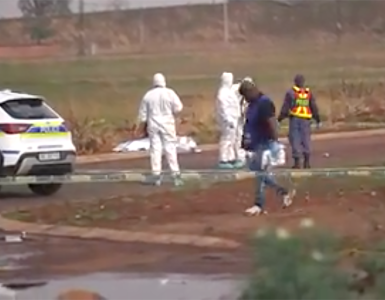
The discovery of nine women’s bodies across Ekurhuleni has intensified fears for women’s safety and brought South Africa’s wider violence crisis into sharp focus.
Police have prioritised the investigations but have yet to establish whether the deaths are connected. For families awaiting answers, the question is who killed the women. For communities living with the fear that followed the discoveries, it is also how women can be protected now.
Dr Tara Farrer Harris, of the University of Pretoria’s Department of Social Work and Criminology, said the deaths demanded an urgent criminal justice response and a closer examination of the conditions that allowed offenders to target women.
“The answer cannot lie primarily in asking what women should do differently, but rather in reducing opportunities for offence, strengthening capable guardianship and making public spaces safer,” she said. The scale of the national crisis is reflected in crime figures released by Acting Police Minister, Firoz Cachalia. Police recorded 5 181 murders between January and March 2026 and another 5 427 between April and June.
The solution to violence against women cannot simply be for women to become more proficient in avoiding danger…
– Criminologist Tara Farrer Harris
Together, the two quarters account for 10 608 people murdered in six months — an average of almost 59 a day. Murder declined against the corresponding period a year earlier in each quarter, but Cachalia said levels of violence and criminality remained unacceptably high.
According to the SAPS first-quarter crime statistics for the 2026/27 financial year, 569 women were murdered between April and June 2026.
Key Statistics (April – June 2026)
• Murders of women: 569 recorded by the Crime Registrar (an average of more than six a day).
• Attempted murders: 1 052 women survived attempted murder over the same period.
• Rape cases: 8 814 sexual offense and rape cases involving women and child victims were reported out of 9,201 total cases.
Reported rapes numbered 9 782 between January and March and 9 201 between April and June. The combined total of 18 983 represents about 105 reported rapes a day.
Those figures are not a count of all gender-based violence against women. Police record offences such as murder, rape and assault in separate categories and reported cases cannot capture violence that never reaches the police. The location of many reported rapes also complicates the idea that safety can be secured simply by avoiding deserted public places. Of the 9 782 rapes recorded between January and March, 4 620 took place at the home of either the victim or the perpetrator.
Harris said heightened precautions were sensible while there was a reasonable possibility of immediate harm in Ekurhuleni. Advice to avoid isolated areas, travel with others where possible and share one’s location could help women assess an immediate risk.
But she warned that those measures could not become the country’s lasting answer to violence against women. Women already changed their movements, routines and participation in public life because they feared being attacked. The Ekurhuleni deaths could deepen those restrictions.
“At what point do legitimate safety advice and mechanisms divert responsibility for managing the risk of violence onto the potential victim?” Harris asked. She cautioned that a heavy focus on what women should have done differently could lead to victim-blaming. Instead of asking why a woman was in a particular place, she said, authorities should examine why an offender could act there without being stopped.
That meant looking beyond police patrols to lighting, surveillance, safer transport, community policing and effective systems for reporting threats and responding to them. It also meant pursuing offenders and holding them accountable.
The First South African National Gender-Based Violence Study, released in 2024, found that 35.5% of women aged 18 and older had experienced physical or sexual violence during their lifetime — an estimated 7.85 million women.
Harris said statistics could show the magnitude of the problem, though they could not convey the loss experienced by victims’ families and communities. The fear of violence, too, could limit women’s independence long before an attack occurred.
“The solution to violence against women cannot simply be for women to become more proficient in avoiding danger,” she said.
As detectives work to establish what happened to the nine women in Ekurhuleni, Harris said the longer-term task was to reduce opportunities for offenders and strengthen protection for women in the places where they live, travel and work.
No arrests have been made.
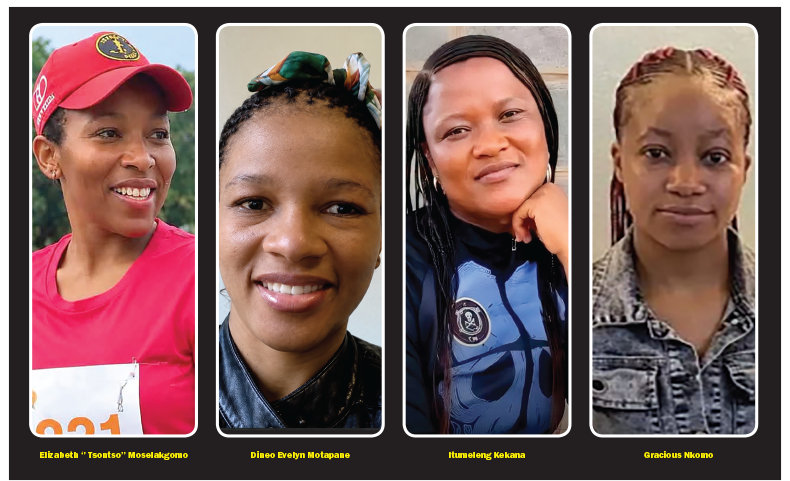
Four of the nine women whose bodies were found in the Ekurhuleni area have so far been identified by their families.
IDENTIFIED VICTIMS
• Elizabeth ‘’ Tsontso’’ Moselakgomo (38), whose body was found in Rhodesfield, Kempton Park.
• Itumeleng Kekana ( 32), whose body was found in Pomona, Kempton Park.
• Dineo Evelyn Motapane (38), whose corpse was found in Kwa Thema, Springs. And
• Gracious Nkomo (28), whose body was discovered along the R21 in Kempton Park.