 WeeklySA_Admin
VISIBILITY: Africa’s expanding television and streaming market offers filmmakers fresh opportunities, but a six-country study warns that weak distribution, costly data and financing gaps are preventing local stories from reaching viewers and earning sustainable returns…
By Len Maseko
African filmmakers need stronger distribution networks, affordable viewing options and investment beyond production if the continent’s growing screen industry is to turn its storytelling talent into sustainable businesses.
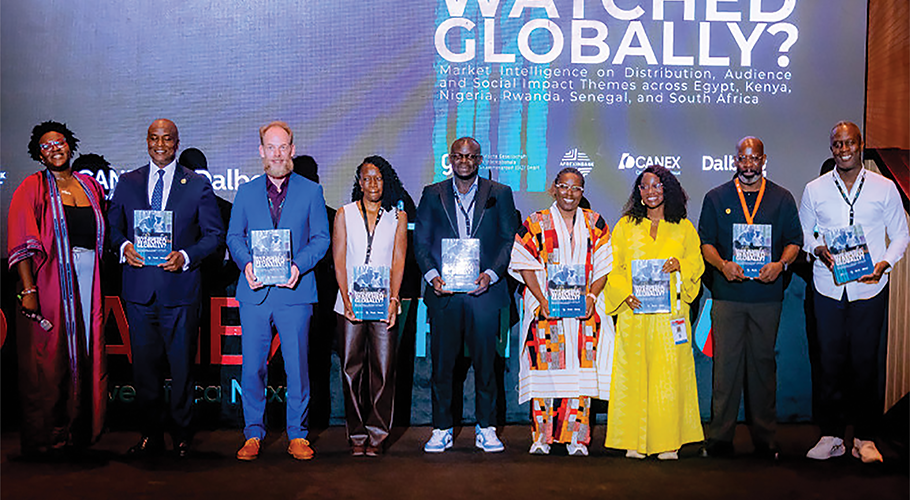
This is a central finding of Made in Africa, Watched Globally?, a new study examining the barriers between African films and their potential audiences across Egypt, Kenya, Nigeria, Rwanda, Senegal and South Africa.
Unveiled at CANEX WKND 2026 in Lagos, the research warns that growth in Africa’s paid television and online streaming market — projected to reach US$5.2 billion by 2030 — will not automatically translate into greater visibility or reliable earnings for filmmakers.
The study was commissioned by the German development agency GIZ and the African Export-Import Bank through its Creative Africa Nexus (CANEX) programme, and produced by Dalberg.
It draws on 91 stakeholder interviews, a survey of 1 630 viewers and five in-depth case studies. Its audience findings reflect the viewers sampled and are not nationally representative. The research highlights the importance of stories that connect with audiences, supported by strong acting and production standards. Among South African respondents, 98% rated acting quality as important when choosing films, while 96% said the same of plot and technical quality. In Rwanda, 56% identified a lack of interest in stories or themes as a barrier to watching local or African films.
Even when viewers want to watch African productions, finding them can be difficult. In Kenya, 52% of respondents said local and African films were hard to find on mainstream platforms.
The study recommends better audience information to help producers, distributors and platforms understand viewing preferences, spending patterns and how people discover films.
YouTube has become an important distribution channel. Among respondents who stream films, 87% in Kenya and 98% in Senegal reported using the platform. However, the research cautions that large audiences do not necessarily deliver sustainable income, with advertising earnings and monetisation opportunities varying.
Scarce screens, costly data
Limited cinema infrastructure further restricts access. According to the study, Africa has approximately one cinema screen for every 787 000 people, compared with one for every 8 700 in the United States.
Existing screens are also concentrated in major cities. About 90% of Egypt’s screens are in Cairo and Alexandria, while more than three-quarters of Kenya’s fewer than 50 screens are in Nairobi.
Mobile viewing offers another route, but data costs remain an obstacle. The report estimates that 1GB of mobile data costs the equivalent of 3.1% of monthly income across many African markets, exceeding the global affordability benchmark of 2%.
It identifies advertising-funded services, offline downloads, lower-cost data bundles and flexible payment systems as ways to make films more accessible. In Kenya, for example, platforms such as Viusasa have offered 24-hour subscriptions costing KES10–20, enabling viewers to pay in small amounts instead of committing to monthly subscriptions.
Funding the journey
The study calls for investment in the businesses that acquire, market and distribute films, alongside support for production.
It identifies a weakened “missing middle” of platforms and aggregators able to pay licensing fees and commission mid-budget productions for domestic and regional audiences.
Recommended measures include distribution funds to support marketing, subtitling, dubbing and coordinated releases, as well as grants and preferential loans for African-owned distribution companies. Osahon Akpata, chief executive of CANEX Creations Incorporated, said African filmmakers had already demonstrated their ability to produce compelling stories. “The next priority is to ensure that this growing demand translates into sustainable businesses and greater economic returns for African creatives,” he said.
“This requires investment across the entire film value chain, alongside stronger African-owned enterprises capable of bringing local productions to regional and international markets.” The experience of the Kenyan documentary Searching for Amani illustrates the gap. Despite premiering at the Tribeca Festival in 2024 and being selected for approximately 100 festivals worldwide, its makers struggled to fund community screenings in Kenya.
Stories that can prompt action
Beyond commercial returns, the report examines film’s capacity to encourage public discussion and action on issues including youth opportunity, gender equality, governance and cultural identity.
It cites the Senegalese documentary L’utilité et l’attachement, about unpaid compensation owed to communities displaced by a rail project. According to the study, a screening prompted presidential instructions to address their claims.
The researchers recommend funding local screenings and discussions, while tracking changes in attitudes, behaviour and public decisions.
They also stress the importance of protecting filmmakers’ editorial independence, warning that funders’ influence — or the perception of it — can restrict commercial sales and audience reach.
GIZ project manager Victor Chudal-Linden said the research would be valuable if industry players, policymakers and development partners used its findings together to understand audiences and address distribution gaps.
“Good decisions start with a clear picture — and a clear picture emerges from many data points,” he said.