 WeeklySA_Admin
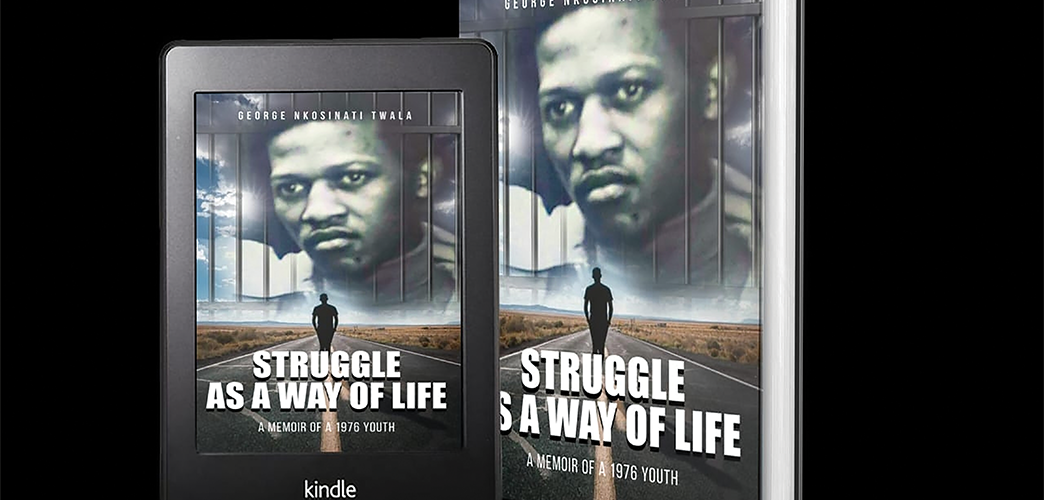
SACRIFICE: Fifty years after the Soweto Uprising, former freedom fighter, diplomat and Soweto 11 trialist George Nkosinathi Twala offers a deeply personal account of resistance, exile and survival. In his book The Struggle is a Way of Life, he confronts the psychological wounds of the liberation struggle and asks what freedom has truly cost those who fought for it…
By Own Correspondent
As South Africa marks the 50th anniversary of the June 16 Soweto Uprising, a new memoir by Ambassador George Nkosinathi Twala offers a powerful reminder that the struggle for freedom did not end with democracy.
The Struggle is a Way of Life is more than a political memoir. It is a deeply personal account of resistance, sacrifice and survival told by a man whose life was shaped by one of the defining moments in South African history.
Twala, a freedom fighter, diplomat, writer and one of the accused in the historic Soweto 11 Trial, was at the heart of the student uprising that erupted in Soweto on June 16, 1976. Like many young activists of his generation, he paid a heavy price for challenging apartheid. Arrest, detention, torture and eventual exile became part of a journey that would later see him undergo military training as a cadre of Umkhonto we Sizwe (MK) before serving democratic South Africa as a diplomat.
His story mirrors the broader arc of South Africa’s political transformation – from the brutality of apartheid to the promise, and often the contradictions, of freedom.
What makes The Struggle is a Way of Life particularly significant is that it provides a first-hand account of events that are often told through official histories, political speeches and academic analysis. Twala writes not as an observer of history, but as one of its participants.
His recollections of the uprising capture the determination, fear and uncertainty of a generation of young people who refused to accept the limitations imposed on them by apartheid. The memoir revisits the streets of Soweto at a time when students became the face of resistance and when ordinary schoolchildren challenged one of the most powerful and repressive states on the African continent.
Yet the book’s greatest contribution lies in its willingness to move beyond the familiar narrative of heroism and victory.
Twala confronts a subject that remains largely overlooked in South Africa’s public memory: the psychological cost of liberation. He writes candidly about trauma, loss and the emotional burdens carried by many former activists long after the celebrations of freedom began.
For many veterans of the struggle, the scars of detention, torture, exile and armed conflict did not disappear with the arrival of democracy. Instead, they became part of an internal struggle that continues decades later. Twala explores these realities with remarkable honesty, offering readers insight into the long shadow cast by Post-Traumatic Stress Disorder (PTSD), survivor’s guilt and unresolved grief.
There are moments of humour, warmth and pride throughout the memoir, but there is also profound introspection. Twala reflects on friendships lost, opportunities sacrificed and the personal costs borne by those who dedicated their youth to the liberation cause.
His haunting observation — “I have come to terms with the aren’t, yet I can’t help but wonder what else I could have been if I had been born in a different, free South Africa” — captures the paradox at the heart of the struggle generation’s experience. Freedom was won, but not without consequences that can never be fully measured.
As South Africa commemorates the 50th anniversary of the Soweto Uprising, The Struggle is a Way of Life arrives at an important moment. It reminds readers that history is not only found in public monuments, political anniversaries and official narratives. It also lives in the memories of those who carried the burden of resistance and continue to live with its consequences.
The memoir stands as both a valuable historical record and a deeply human story. It honours the courage of a generation while challenging South Africans to acknowledge the hidden wounds that many freedom fighters still carry.
More than a reflection on the past, Twala’s book is a conversation about healing, memory and the unfinished work of liberation. It asks whether a nation can truly move forward without confronting not only the injustices of its history, but also the emotional and psychological legacy they left behind.
For readers seeking to understand the human dimension of South Africa’s liberation struggle, The Struggle is a Way of Life is an essential and timely contribution. Fifty years after June 16, it serves as both a testament to resilience and a reminder that some battles continue long after the guns fall silent. – Jambo Africa/WSAM