 WeeklySA_Admin
TRANSPARENCY: Why recent court ruling that the parastatal must disclose agreements with suppliers matters…
By Felix Dube
South Africa’s Supreme Court of Appeal recently ruled that the country’s state-owned electricity utility Eskom must disclose its contracts with coal and diesel suppliers. This is a major victory for transparency in a sector that has long been marked by secrecy, financial instability and weak public trust.
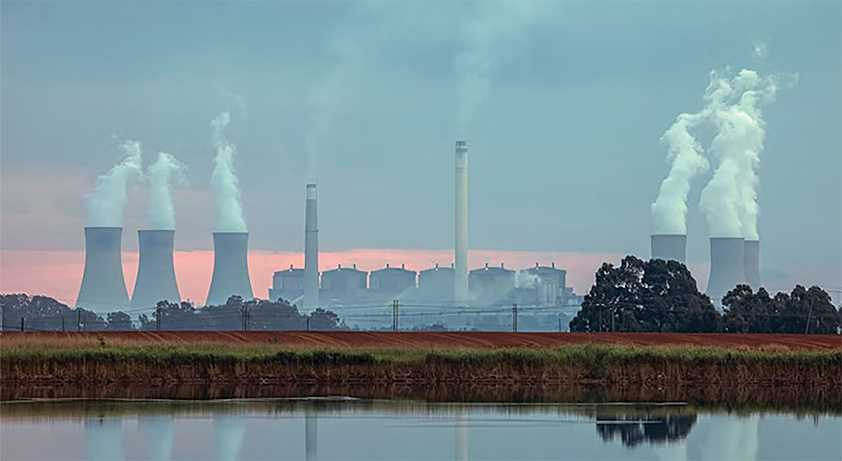
Eskom generates about 90% of the country’s electricity, mainly through burning coal that it buys from South Africa’s coal mines.
Eskom spends R70 billion (US$4.16 billion) a year on coal and its transport alone but until now, its contracts with the mines have been kept hidden.
The case began in 2024, when South Africa’s High Court ordered Eskom to disclose all its coal and diesel contracts. This didn’t happen because Eskom appealed the ruling.
But on 23 March 2026, the Supreme Court of Appeal dismissed the appeal, saying that vague claims of commercial secrecy are not enough when the public asks how the power utility spends public money, and that Eskom would have to make all active coal and diesel contracts public.
This new ruling could become one of the most important electricity transparency decisions in years. Although the case was brought by AfriForum, a pressure group that works to advance the rights of Afrikaners, the ruling is important for society as a whole.
South Africa has an access to information law that gives people a right to apply for and receive state records. Eskom is state-owned. It is worth mentioning that over the past 20 years, the South African government guaranteed about R350 billion (US$20.7 billion) of Eskom’s debt, and eventually took over R230 billion (US$13.7 billion) of the utility’s debt. When billions in public money is spent, secrecy becomes hard ethically and legally to defend.
I research electricity governance, administrative law, constitutional accountability and the right to electricity. South Africa has an electricity crisis marked by supply shortages, rising costs, weak public trust and persistent concerns about how decisions are made.
Resolving the electricity crisis is more than about supply. It is also about transparency, trust and fair decision-making. This recent judgment strengthens that same idea.
Why Eskom lost the court case
The judges pointed out that coal and diesel prices are already widely known. They also emphasised that Eskom buys these fuels through open, competitive tender processes. Once a contract is awarded through an open tender process, it becomes much harder to say the price and terms are still genuinely secret.
The court also rejected the idea that disclosure would damage Eskom’s future bargaining position or make collusion more likely. Eskom’s argument was essentially that if suppliers knew what had been agreed in existing contracts, this could affect future negotiations or encourage coordinated conduct in future tenders.
However, Eskom did not show this with concrete facts. It mostly offered broad warnings.
That was not enough for the court. This part of the ruling matters because it confirms the basic principle that when a public body holds information, openness is mandatory by default. Secrecy is the exception, and it must be justified.
Why the ruling matters beyond this case
The ruling means it will become more difficult for Eskom – and perhaps other organs of state – to hide important public-interest documents behind vague claims of commercial harm. This matters in a country where trust in electricity governance is already low. Eskom has been shadowed by years of financial trouble and very serious corruption allegations. In this context, public scrutiny is not a luxury. It is part of accountability.
I’ve written before about how, in late October 2025, the court ruled that the process used by the National Energy Regulator of South Africa (Nersa) to decide yearly electricity price hikes was unconstitutional because it stifled public participation and violated the right to fair administrative action.
The problem the court found was that the cost of supplying electricity, which price hikes are based on, was hidden from the public. The energy regulator is also supposed to calculate price hikes in a way that allows public input. Secrecy means that people affected by high electricity prices didn’t get a chance to state their views.
In the latest case, the issue is fuel contracts. Different documents, same principle: when the public cannot see the records behind electricity decisions, it cannot properly test whether those decisions are lawful, fair or sensible.
The latest judgment also speaks to the wider move of South Africans away from the grid. More households and businesses are looking for solar and battery options because the formal system is unreliable and costly.
But going off-grid is not a solution for everyone. Most South Africans still depend on Eskom and municipalities. Eskom distributes electricity directly to many homes, businesses and other users, while municipalities purchase bulk electricity from Eskom and then resell it within their own areas. That makes transparency in the main system even more important.
What the judgment changes, and what it does not The court did not say every Eskom document must always be released to the public. There will still be cases where confidentiality is justified. But it did say that a public body cannot just use the words “commercial sensitivity” and end the conversation. It must show, with real facts, why disclosure would cause them economic harm.
The judges also did not need to rely on the law’s public-interest safety valve. Put simply, that is a rule that can require a record to be disclosed if the public interest in seeing the record is strong enough, even where there may be other legal reasons to keep it secret. Eskom had already failed at the earlier step of showing that the contracts deserved to stay secret. That makes the ruling stronger. It means the court treated openness as the ordinary rule, not a special favour.
South Africans have a constitutional right to electricity. It’s closely tied to dignity, housing, water, health and basic economic life. If it is that important, then the public has a strong claim to know how the utility responsible for it spends public money.
For that reason, this is not just a win in one court case. It is a reminder that in a constitutional democracy, the public should not be asked to pay for an electricity system it cannot properly scrutinise.
* Dr Felix Dube is a lecturer in the Department of Public Law, School of Law, University of Venda
Comment
The Cost of Forgiveness
South Africa’s global reputation as a nation of forgiveness is well earned. Out of the brutality of apartheid emerged a political settlement anchored not in vengeance, but in reconciliation. Victims forgave. Perpetrators were heard. The country chose peace over retribution.
But three decades later, a difficult question presses with growing urgency: what has that forgiveness yielded—and at what cost?
New global research confirms that South Africans rank among the most forgiving people in the world.
That instinct is not accidental. It is rooted in a painful history and a deliberate national choice—to move forward without settling every score of the past.
Yet forgiveness, by its very nature, assumes something in return: acknowledgement, remorse, and a shared commitment to repair.
Here, the national project appears far less complete. While individual acts of contrition and corporate transformation have occurred, there has been no broad, sustained, collective reckoning with the full moral weight of apartheid and colonialism.
The brutality, dispossession and systemic dehumanisation that defined that era have not been matched by an equally visible, society-wide expression of remorse—or by what might be called economic repentance.
Instead, the legacy of privilege remains deeply embedded in the structure of the economy. Wealth, land, and opportunity continue to reflect historical advantage. And where policy attempts have been made to address this imbalance—however imperfect—resistance has often been swift and strident.
Historical injustice
Black Economic Empowerment, flawed as it may be, represents one such effort. Yet it is frequently attacked, not merely for its shortcomings, but for its very intent: to redress historical injustice. That opposition, in many cases, comes from those who have benefited most from the very system it seeks to correct.
This is the paradox at the heart of South Africa’s democracy.
Forgiveness was extended—generously, even courageously.
But reconciliation is not a one-sided act. It requires movement from both sides: not only the willingness to forgive, but the willingness to acknowledge, to atone, and to materially address the consequences of injustice.
Without that balance, forgiveness risks becoming something else entirely: a burden carried by the wronged, rather than a bridge to shared renewal.
The persistence of inequality suggests that the work of reconciliation remains unfinished. The question is not whether South Africans can forgive—we know we can.
The question is whether the country, as a whole, is prepared to meet that forgiveness with the honesty, accountability and tangible change it demands.