
 WeeklySA_Admin
TRADE-OFF: In a new twist, scientists are uncovering how the body itself may hold the key to long-term HIV control—without daily medication…
By WSAM Correspondent
For decades, HIV has been managed, not defeated.
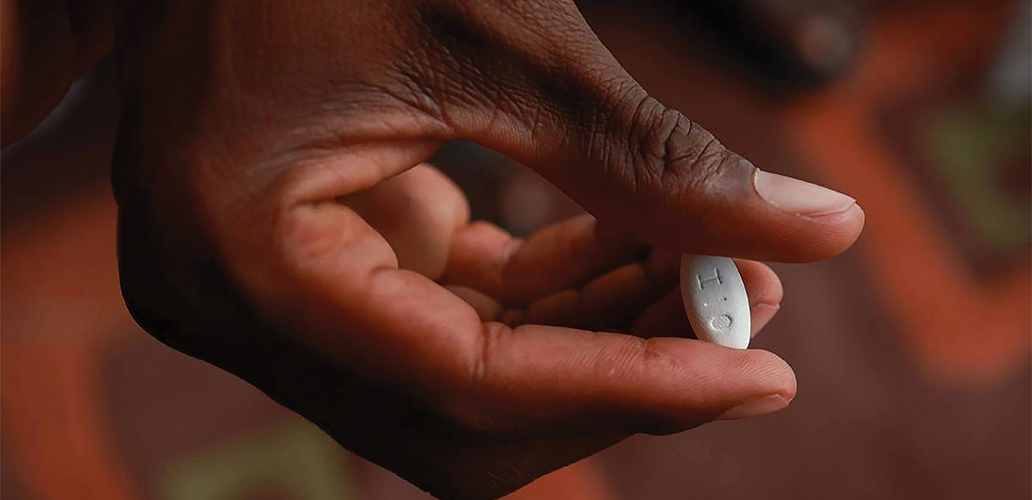
Modern antiretroviral therapy (ART) had transformed what was once a fatal diagnosis into a chronic, manageable condition. Millions of people now live long, healthy lives because of it. But the trade-off has always been clear: treatment must be taken every day, for life.
Stop, and the virus returns.
Yet, a growing body of research is beginning to disrupt that certainty. Scientists are now studying a rare group of individuals who, after stopping treatment, are able to keep HIV suppressed for months—or even years—without medication.
Their bodies, it seemed, had learned how to do what medicine cannot yet fully achieve: keep the asleep,
Why HIV Returns
To understand the significance of this breakthrough, it has become for important for scientists to grasp why HIV has proven so difficult to cure.
The virus does not simply circulate in the bloodstream. Instead, it embeds itself deep within the body’s immune system, inserting its genetic material into long-lived cells known as CD4+ T cells. These infected cells become part of what scientists call the HIV reservoir—a hidden archive of the virus that can remain dormant for years.
What we’re seeing is that the body may already have the tools
to control HIV—we just need to learn how to use them …
Even the most effective treatment cannot eliminate this reservoir.
ARVs work by preventing HIV from replicating but it do not remove the virus from these silent cells. The moment treatment stops, the virus can reactivate, begin reproducing, and quickly re-establish itself in the body.
Over the past decades, scientists have been grappling with why a complete cure—one that removes every trace of HIV—has remained elusive.
Patients who don’t rebound
But not everyone has surprisingly followed this pattern, though.
In carefully monitored clinical trials, a small number of participants who paused treatment did not experience the rapid viral rebound typically expected. Instead, their HIV levels remained suppressed for extended periods—sometimes for several months or longer.
These individuals were not cured in the traditional sense. The virus was still present in their bodies –but remained inactive.
Recent work by scientists at the Gladstone Institutes, published in the journal Immunity, has provided some of the clearest answers yet. By analysing blood samples from individuals before they stopped treatment, researchers were able to identify biological patterns linked to delayed viral rebound.
“Strikingly, a small number of people rebound much more slowly and take months—or even longer—to do so,” says Dr Nadia Roan, senior investigator at the Gladstone Institutes. “Understanding why could change how we treat HIV entirely.”
“What we’re seeing is that the body may already have the tools to control HIV—we just need to learn how to use them,” Roan says.
What they found suggested that control of HIV might not depend on a single factor—but on a combination of immune strength and genetic regulation.
One of the most striking findings involved a specialised group of immune cells known as stem cell memory CD8+ T cells.
Unlike ordinary immune cells, these cells have “stem-like” properties. They can persist in the body for long periods and continually regenerate themselves, maintaining a sustained immune response.
Patients with higher levels of these cells were significantly more likely to delay HIV rebound after stopping treatment.
In effect, these cells acted as long-term sentinels—capable of recognising and suppressing infected cells before the virus could spread.
Researchers also identified unusual forms of natural killer (NK) cells in some individuals with delayed rebound. While NK cells are typically known for destroying infected cells, they also play a regulatory role—helping to coordinate the broader immune response.
Together, these findings suggested that in some people, the immune system was not just reacting to HIV—it was actively controlling it.
Unlocking the Genetic Code
Beyond immune cells, the study uncovered another critical layer of control: genes within infected cells that keep HIV dormant.
Two genes in particular—DDIT4 and ZNF254—were found at higher levels in individuals who experienced delayed viral rebound. Laboratory experiments confirmed that both genes can suppress HIV activity, effectively preventing the virus from reactivating.
These genes acted like internal “locks,” keeping the virus in a silent state.
This discovery supports a growing scientific strategy known as “block and lock.” Instead of trying to eliminate HIV completely, researchers aim to block its ability to reactivate and lock it into permanent dormancy.
If successful, this approach could transform HIV treatment—from continuous suppression with medication to long-term control without it.
There is also intriguing evidence from so-called elite controllers—rare individuals whose bodies naturally suppress HIV without ever needing treatment. These individuals show higher levels of similar genetic activity, particularly involving ZNF254.
The implications were powerful: if these mechanisms could be replicated or enhanced, it might be possible to extend this natural control to a much wider population, the scientists concluded.
Metformin – the road ahead
Perhaps the most immediately promising aspect of the research is the potential role of a familiar drug: metformin. Widely used to treat type 2 diabetes, metformin is safe, affordable, and already available globally. The study found that metformin can increase the activity of the gene DDIT4—one of the key “locks” that suppress HIV.
In laboratory experiments, the scientists discovered that treating immune cells from people living with HIV with metformin prevented the virus from reactivating.
While these findings were still preliminary, the scientists believe they open the door to a remarkable possibility: that an existing, low-cost drug could help delay—or even prevent—HIV rebound after treatment stops.
Researchers are now moving toward pre-clinical and clinical studies to test whether these effects hold true in real-world patients.
One of the most important insights from this research was that there might not be a single solution to controlling HIV.
This multi-layered approach reflected the complexity of HIV itself—and suggested that future treatments might need to be equally sophisticated.
A Turning Point
For countries like South Africa, which carried one of the largest HIV burdens in the world, the implications were profound.
The success of ARV therapy had been one of public health’s greatest achievements. But it came with long-term challenges: lifelong adherence, system-wide costs, and the daily burden placed on millions of individuals.
A functional cure—one that allowed patients to live without continuous treatment—would represent a fundamental shift. It would also align with the global ambition to end HIV as a public health threat by 2030. That goal remained ambitious.
The Road Ahead
Much of the current research remained in early stages, the scientists have cautioned. Clinical trials would be essential to determine safety, effectiveness, and long-term outcomes, they say.
After decades of fighting HIV with external interventions, science was beginning to harness the body’s own biology—its immune defences, its genetic controls—to keep the virus in check.
The question is no longer just how to treat HIV but whether scientists can finally learn how to control it without constant intervention.
“We’re moving from a model of constant suppression to one of durable control,” Roan says. “The goal is no longer just to treat HIV—but to give people the ability to live free from the burden of daily therapy.”
And, if that shift holds, the future of HIV may not be defined by lifelong treatment—but by the body’s own ability to keep the virus in check. – Science X/WSAM