
 WeeklySA_Admin
HUB: With mining still dominant, the province is turning to manufacturing, agro-processing and logistics to secure jobs and growth in a changing energy economy…
By Nhlanhla Mbatha
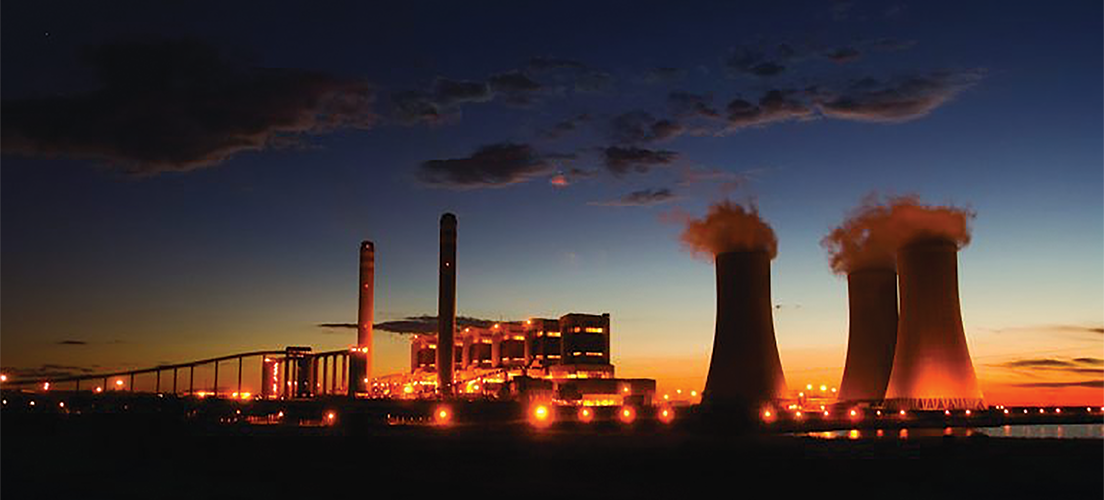
For decades, Mpumalanga’s industrial identity has been defined by coal mines, power stations and heavy industry. The province produces the bulk of South Africa’s coal and hosts many of the power plants that keep the national grid running.
But a quieter transformation is beginning to unfold. Faced with the long-term pressures of the global energy transition and the need to diversify its economy, Mpumalanga is increasingly positioning manufacturing, agro-processing and logistics as the next drivers of growth. At the centre of this shift are two provincial economic institutions – the Mpumalanga Economic Growth Agency (MEGA) and the Nkomazi Special Economic Zone (NSEZ) – working to attract investment and build new industrial capacity across the province.
From coal to corridors of trade, Mpumalanga is betting its future
on industrial diversification…
The stakes are significant. While Mpumalanga remains one of South Africa’s most resource-rich provinces, unemployment and uneven economic growth continue to challenge policymakers.
In his 2026 State of the Province Address, Mpumalanga Premier Mandla Ndlovu pointed to signs that the provincial economy is beginning to regain momentum.
Employment in the province reached 1.28-million people in the fourth quarter of 2025, the highest level on record. This reflected net job gains of more than 37 000 during the period, while 28 717 jobs were created during 2025 overall.
The province’s unemployment rate has also declined to 32.3%, placing Mpumalanga among the four provinces with the lowest unemployment rates nationally. Growth remains modest, however. Provincial economic growth is projected at about 1.3% in 2026, potentially rising to around 2% annually from 2027 if major investment projects materialise.
For the provincial government, the implication is clear: accelerating industrial development will be critical to sustaining economic expansion.
Historically, Mpumalanga’s economy has been dominated by coal mining, electricity generation and energy-intensive industry. The province produces roughly 80% of South Africa’s coal, feeding the large cluster of power stations concentrated around the Highveld.
Industrial activity is also anchored by major facilities such as the Sasol Secunda Synfuels Operations complex, one of the world’s largest coal-to-liquids plants, as well as a network of forestry processing plants, paper mills and agricultural processing facilities.
Yet the province’s economic planners increasingly see manufacturing diversification as essential to long-term growth, particularly as the national energy landscape evolves.
Agriculture already provides a strong foundation for this shift. Although the sector contributes only about 3% of provincial GDP, it employs around 104 000 people, roughly 12% of Mpumalanga’s workforce.
Expanding agro-processing industries, particularly those linked to citrus, sugar, forestry and food production is therefore seen as a major opportunity to increase value addition within the province.
Encouragingly, recent investment activity suggests growing confidence in Mpumalanga’s industrial potential.
According to the Premier, the Mpumalanga Investment and Mining Conference held in 2025 secured investment commitments totalling about R238-billion, including R25-billion earmarked for green-economy projects.
These commitments span sectors including mining, renewable energy, forestry, logistics and manufacturing. Translating those commitments into operational industrial facilities, however, will depend heavily on infrastructure, logistics and industrial platforms capable of supporting large-scale investment. One such platform is the Nkomazi Special Economic Zone (NSEZ).
Located near Komatipoort in eastern Mpumalanga, the Nkomazi SEZ occupies a strategically important position along the Maputo Development Corridor, a key trade route connecting South Africa’s industrial heartland with the Port of Maputo in Mozambique. The zone is being developed as a multi-sector industrial platform targeting agro-processing, logistics, energy-related manufacturing and light industrial production.
Planned across more than 300 hectares, the NSEZ is being implemented in phases and will include serviced industrial sites, internal road networks, utilities infrastructure and logistics facilities designed to support export-oriented manufacturing.
Its proximity to the borders of Mozambique and Eswatini positions the zone as a potential gateway for regional trade, allowing manufacturers to integrate more efficiently into cross-border supply chains.
Industrial zones located along major trade corridors have increasingly become important tools for attracting manufacturing investment, particularly where companies seek to reduce transport costs and improve access to export markets.
Infrastructure development remains central to Mpumalanga’s industrial ambitions.
The provincial government has prioritised road upgrades and transport infrastructure in order to strengthen trade corridors linking the province to neighbouring countries and major economic centres.
According to the Premier, about R2.5-billion was invested in road infrastructure across Mpumalanga during the past year, improving connectivity between industrial areas, agricultural production zones and cross-border trade routes.
These logistics links are essential for industries operating in sectors such as mining, agriculture and manufacturing, where efficient freight movement plays a critical role in competitiveness.
The success of Mpumalanga’s manufacturing ambitions will ultimately depend on more than infrastructure and incentives. Skills development, innovation and industry partnerships are also expected to play an important role.
Collaboration with institutions such as the University of Mpumalanga is already under way to strengthen research capacity and support workforce development in sectors such as agriculture, manufacturing and logistics.
For provincial policymakers, the objective is to build an industrial ecosystem capable of sustaining growth beyond traditional mining and energy industries.
Mpumalanga’s economic future will likely continue to be shaped by coal and energy production for many years to come. But alongside these industries, a new layer of manufacturing and logistics activity is gradually emerging.
Initiatives such as the Nkomazi Special Economic Zone, supported by investment promotion efforts and improved transport infrastructure, could become important catalysts for that transition.
If these plans succeed, Mpumalanga may increasingly evolve from a province defined by resource extraction into one characterised by diversified industrial production and regional trade.
· Mbatha is an independent media practitioner