 WeeklySA_Admin
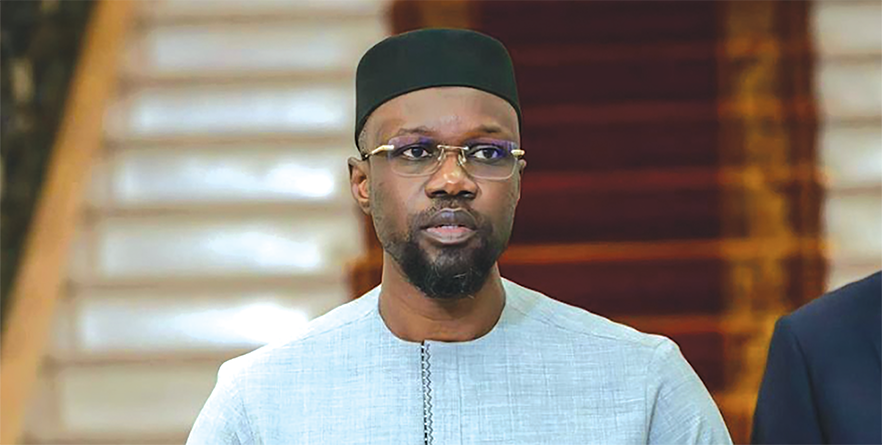
VIRTUE: In a defiant and philosophical address this week delivered after being elected Speaker of Parliament, former Senegalese Prime Minister Ousmane Sonko warned that nations collapse not only from poverty, but from “moral exhaustion”…
By Ousmane Sonko
Ladies and gentlemen, deputies, as I enter this National Assembly today with the responsibility of presiding over it. I am fully aware of the gravity of the historic moment our country is experiencing. Here I am, called upon to lead the institution responsible for directly representing popular sovereignty. Some see this as a crisis, others as a rift. For me, above all, this is a test of truth for our democracy.
People do not judge politicians solely by their victories. They judge them above all by their ability to remain true to their principles when holding power becomes uncomfortable. But there is a question more important than knowing who governs. That question is, in the name of what do we govern? The country has witnessed deep divisions emerge at the highest levels of the state.
These have been described as personal rivalries, conflicts of ambition or struggles for influence. I do not wish to encourage this reductive interpretation. What is at stake goes beyond individuals. What is at stake is the relationship between morality and politics.
We come from a long history of African dissolution. How many peoples have seen liberation movements turn into instruments of domination? How many promises of change have dissolved into privilege, compromise, and silence? How many revolutions have ended up fearing the transparency they once demanded?
Aristotle wrote in the Nicomachean Ethics that politics is the highest art because its purpose is the common good. Not for the benefit of a faction, not for the preservation of power for its own sake, but for the good of the city. He also reminded us that no city can endure if virtue disappears from those who govern it. Even in Senegal, this question of the ethics of power is not foreign to us.
President Mahmoudou Diyar had already pointed this out. No national transformation project can survive if leaders confuse the state with their own interests. For him, sovereignty could not be merely political. It had to be moral, economic and social as well. He knew that a country can have a flag, a national anthem and institutions, yet still remain trapped by practices that drain the republic of its meaning.
What Mumudia understood very early on, many African nations discovered sometimes too late. A country can survive material poverty, but rarely to the collapse of its public morality. A nation does not die only from economic poverty, it can die from moral exhaustion. It can die when institutions stop serving the people and become instruments of comfort, fear and calculation.
It can die when institutions cease to serve and instead become instruments of comfort, fear, or calculation. We come from a long history of African dissolution. How many peoples have seen liberation movements turn into instruments of domination? How many promises of change have dissolved into privilege, compromise, and silence? How many revolutions have ended up fearing the transparency they once demanded?
St. Augustine, in the city of God, asked a formidable question. What is a state without justice if not a great association of bandits? This phrase endures. This phrase remains relentlessly relevant for all the nations of the world.
When public power ceases to be guided by justice, it no longer inspires trust. It breeds resignation and anger. That is why I want to say it here with solemnity. It is not an ornament meant for campaign speeches. It is the condition for the survival of nations. When a people lose faith in public discourse, they gradually stop believing in the institutions themselves.
Our historical responsibility is immense because our people have suffered greatly to make the citizen revolution at the ballot box possible. In 2024, young people have fallen. Families have wept. Citizens have experienced prison, fear, and sometimes exile. The Senegalese people did not bring our project to power just to witness a simple change of elites.
They supported it to restore a certain idea of public dignity. This inner loyalty to the dignity of a people runs throughout our national history. Aline Sitoediata had already understood that a people remained free only when they refused to defend themselves in the face of colonial domination. She had neither an army, nor a state, nor institutions. She possessed only a moral strength.
The conviction that no power can last when it exists at the expense of a people who have given up their dignity? This lesson remains relevant today. Nations begin to lose themselves the day their leaders ask their people to defend themselves. To get used.
Rather than succumbing to the temptation of simply giving up, the wise leader Shahamadu Bamba also taught us another profound and deeply essential life lesson during these moments of extreme social tension and widespread uncertainty. True strength lies not only in the conquest of power but in the ability to remain master of oneself when faced with adversity.
He knew that a man can lose a position without losing his honour and that one can
And that a people can weather storms without abandoning their dignity. This wisdom must be collective. For this reason, institutions cannot be neutral when it comes to moral issues. The National Assembly must be the beating heart of this ethical imperative. And I am fully aware of the symbolism of this moment. The principles and precepts I have just mentioned, I developed them long before.
Long before, during the 2022 legislative campaign, during the 2017 legislative campaign, and during the 2024 legislative campaign, you only have to look back at my various statements and my interview with Walfadiri. To see that there is consistency in what I say about the role the National Assembly should play. And I am fully aware of the symbolism of this moment.
Some believed that the dismissal of a prime minister meant their political disappearance. But in a true democracy, no position exhausts popular legitimacy.
No position exhausts popular legitimacy. The people remain the source of power. And this assembly, strengthened by the massive confidence placed in the project carried by PASTEF during the legislative elections of November 17th,
2024. Today holds a particular historic responsibility. I want to reassure you that I will not use this responsibility to create institutional chaos. I will not use. And no deputy with me will use this assembly to serve personal ambitions. That would be a betrayal of our own struggle.