 WeeklySA_Admin
PUBLIC SAFETY: While investigators piece together circumstances surrounding Ekurhuleni’s murders, politicians already trade accusations. Accountability matters, but turning unresolved killings into another political mud fight demeans the tragedy and those grieving…
By Themba Khumalo
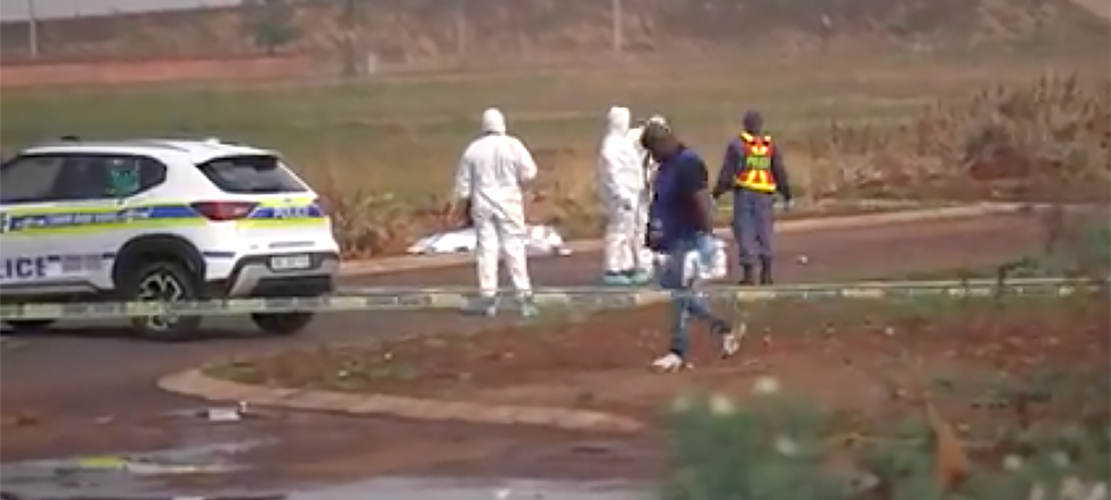
The ink on the autopsy reports has barely dried, investigators have barely left the crime scenes, and some of the women have not yet been identified; yet the political mudslinging is already in full swing.
Families are still waiting for answers; some may still be waiting to learn whether one of those bodies is their daughter, sister, mother, or loved one, while politicians have already begun fighting over who should carry the blame.
That distinction should matter, particularly now when the facts are still being established, and families are still confronting the unbearable reality of what may have happened to someone they love.
Grief is not politics. A family sitting with the knowledge that a loved one has been murdered is not a political constituency waiting to be harvested. A woman whose identity has not even been confirmed is not a campaign prop, and her death should never become a slogan, a petition title, or a convenient opportunity for a politician to score a point against an opponent.
These women were not political talking points; their families are not an audience for campaign slogans, and their deaths should not be reduced to a contest over who can shout the loudest…
There will be time for accountability, and there must be. If the police failed, they must answer for it. If warnings were missed, those responsible must explain what happened. If municipal failures left people vulnerable, those failures must be confronted. Political parties have every right and arguably a responsibility to demand answers from those entrusted with public safety.
But there is something obscene about taking legitimate questions of accountability and turning them into a political mud fight while families are still grieving and investigators are still working.
The dead do not belong to political parties, and neither does the grief of those they leave behind. No party has a proprietary claim over these women, their families, or the fear that has settled over the communities in which their bodies were found.
Yet here we are, watching politicians scramble to plant their flags on a tragedy that belongs first to the victims, their families, and a community traumatised by these killings.
Slogans are flying, accusations are multiplying, and the political machinery is grinding away, apparently oblivious to the fact that behind every body recovered is a human being whose life has been violently extinguished, and a family left to deal with a loss that no political argument can possibly comprehend.
The DA, led by Ekurhuleni mayoral candidate Khathutshelo Rasilingwane, has demanded institutional accountability. It petitioned the Chairperson of the Gauteng Legislature’s Community Safety Portfolio Committee, Dr Bandile Masuku, calling for SAPS senior leadership and the Ekurhuleni Metropolitan Police Department to appear urgently and account for what it describes as operational failures.
The party has asked when SAPS and Crime Intelligence first identified similarities between the murders, whether early warning signs were overlooked, and why a public warning was issued only after multiple bodies had been recovered.
Its petition, titled “Action, Not Advice”, has been accompanied by an offer of R500,000 for information leading to the arrest and conviction of the perpetrator or perpetrators.
Those are serious questions, and they deserve serious answers. The difficulty is that the questions have arrived wrapped in the unmistakable language of political campaigning, giving the governing provincial administration an opening to accuse the DA of using a tragedy for electioneering.
Premier Panyaza Lesufi has rejected the suggestion that law enforcement has remained passive, accusing the DA of politicising the tragedy and using grieving families for electioneering purposes. He has argued that political campaigning, slogans, and monetary rewards are not substitutes for active law enforcement investigations, while maintaining that police and specialised units are closing in on suspects but will not make premature arrests before investigators are satisfied that the docket is strong enough to withstand prosecution.
That distinction matters. An arrest made for the appearance of action is worthless if the evidence cannot carry the case through court. The public deserves justice, not a hurried performance of it.
Nine women’s bodies have been recovered in areas including Kempton Park and Dawn Park in Boksburg, while the Gauteng Provincial Legislature’s Community Safety Portfolio Committee has confirmed that the SAPS established a specialised task team to trace potential links between the cases. The committee has also cautioned the public against unverified speculation that could hamper investigations.
The EFF has taken a different route, placing much of its criticism on institutional breakdown and local governance failures. Former Ekurhuleni MMC for Finance Nkululeko Dunga described Ekurhuleni as the “capital city” for unresolved murders and cold cases, attributing what the party sees as a deteriorating environment to a crisis in community safety leadership and broader police corruption.
The EFF has also pointed to unmaintained streetlights, overgrown grass in public spaces, and broken CCTV systems, arguing that failures in local service delivery create physical environments in which perpetrators can operate without detection. It has used the killings to criticise the Government of National Unity, arguing that the murders demonstrate the failure of the national governance arrangement to deliver basic public security.
Again, these are matters that can be tested against facts. Municipal infrastructure either is or is not being maintained. CCTV systems either are or are not functioning. Police investigations either identify failures or they do not. Political claims do not become established facts simply because they are repeated loudly enough.
The ANC’s Treasurer-General, Gwen Ramokgopa, has rejected political posturing around the tragedy and urged all sectors to view the victims as human beings rather than statistics or political leverage. She has expressed confidence in law enforcement while calling for social scientists and psychologists to assist in addressing the drivers of femicide.
President Cyril Ramaphosa has declared the Ekurhuleni murder investigation a national priority, while Minister in the Presidency for Women, Youth and Persons with Disabilities Sindisiwe Chikunga has called for urgent, targeted police action to secure public spaces where women were targeted.
The Gauteng Provincial Legislature’s Portfolio Committee on Community Safety has attempted to hold the line between accountability and public order, calling for thorough police investigations while urging political parties and the public to refrain from unverified speculation that could compromise investigative dockets or cause panic. It has also emphasised structured cooperation between SAPS, local Community Policing Forums and residents rather than partisan politicking.
Taken together, the positions reveal a familiar political reflex: a tragedy occurs, and almost immediately the argument shifts from what happened to who can make the strongest political case out of what happened.
That is the part that should trouble us.
There is a proper place for political accountability. It is in Parliament, legislatures, council chambers, oversight committees and public debate grounded in evidence. It is in the examination of police performance, municipal responsibility and government decisions. It is in the questions that will have to be answered when the investigation establishes what went wrong.
But grief occupies a different space.
It belongs to the families who are waiting for identification, to those receiving the call they have dreaded, and to communities trying to comprehend the fact that women have been killed among them. Political parties have no special claim to that grief, and no electoral timetable makes it theirs to deploy.
Our politics should be capable of holding two truths at once: the government must be held accountable, and human tragedy must not be stripped of its humanity in the process. The murders demand urgency, the investigation demands discipline, and every public official entrusted with the safety of citizens must be prepared to answer difficult questions when the evidence establishes what happened and where responsibility lies.
But while the facts are still being established and families are still waiting for answers about their loved ones, the political mudslinging serves no one except those who have forgotten what this tragedy is actually about. These women were not political talking points; their families are not an audience for campaign slogans, and their deaths should not be reduced to another contest over who can shout the loudest. There will be time enough for the questions, the accusations, and the political reckoning. For now, there are bodies to identify, evidence to follow, and families waiting for answers. The political mudslinging can wait.
If our politicians cannot resist turning tragedy into another contest over blame, then they should understand this much: while they hurl mud at one another, families are left standing in the wreckage, waiting for the truth about who was taken from them.