 WeeklySA_Admin
FACTOR: CAF has pushed the 2026 Women’s Africa Cup of Nations from March to July, citing “unforeseen circumstances”, but the lack of explanation has fuelled speculation about tensions with hosts Morocco following the controversial Morocco–Senegal final…
By Lehlohonolo Lehana
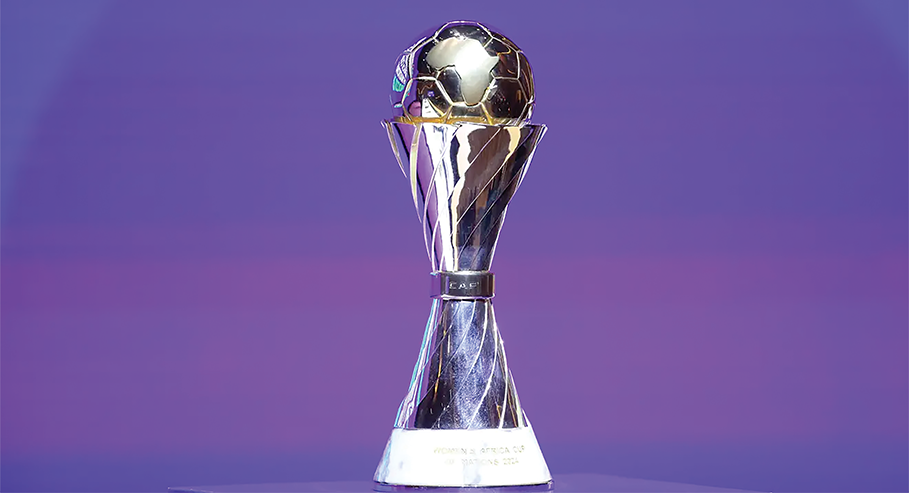
The Confederation of African Football (CAF) has postponed the 2026 Women’s Africa Cup of Nations (WAFCON), a move that has raised questions across African football and triggered speculation about tensions between CAF and tournament hosts Morocco.
The continental showpiece, originally scheduled to take place in Morocco from March 17 to April 7, will now be staged from July 25 to August 16, according to a statement released by CAF on Wednesday.
CAF said the decision was taken in light of “certain unforeseen circumstances” and to ensure the tournament’s success.
However, the governing body did not provide further details about the factors that led to the sudden rescheduling.
“Preparations for the tournament are ongoing and all parties involved remain confident that the competition will be very successful,” CAF said in its statement.
The organisation also stopped short of confirming whether Morocco will remain the host nation, further fuelling uncertainty about the situation behind the scenes.
Minister McKenzie’s frustration
South Africa’s Sports Minister McKenzie has expressed frustration with the uncertainty surrounding the tournament, stressing that women’s football deserves better planning and respect across the continent.
He declared that the country is prepared to step in and host the Women’s Africa Cup of Nations if the need arises amid uncertainties surrounding the tournament.
McKenzie stated that South Africa has the facilities, infrastructure and experience required to successfully organise the competition should Confederation of African Football decide to move the tournament.
“South Africa is ready to host the WAFCON if necessary,” McKenzie said.
The minister emphasized that the country has world-class stadiums and logistical capacity that could easily accommodate a continental tournament of such magnitude.
“We have the stadiums and the facilities needed to organise the competition,” he explained.
“Women’s football should not be treated the way it is currently being treated,” he noted.
Key World Cup qualifier
The stakes surrounding the tournament are high. The 2026 WAFCON will determine Africa’s qualifiers for the 2027 FIFA Women’s World Cup in Brazil, with the four semi-finalists securing automatic qualification.
A fifth African nation will still have a chance to qualify through an intercontinental play-off, making the tournament one of the most important milestones in the women’s football calendar on the continent.
With qualification for the global showpiece on the line, the postponement is expected to affect the preparation schedules of national teams, many of which had already begun planning training camps and friendly matches ahead of the March kick-off.
CAF–Morocco relations
While CAF has offered little detail on the reasons for the postponement, observers have begun to speculate whether tensions between the governing body and Morocco could have contributed to the decision.
The speculation stems partly from the fallout of a controversial CAF women’s final between Morocco and Senegal, in which Senegal’s team reportedly walked off the pitch following disputes over refereeing decisions.
The incident triggered disciplinary proceedings by CAF, but Moroccan football circles were reportedly unhappy with the outcome, with some officials and supporters arguing that the sanctions imposed on Senegal amounted to little more than a “slap on the wrist.”
Although no official link has been confirmed between the disciplinary case and the WAFCON postponement, analysts say disagreements between host federations and governing bodies can complicate tournament planning.
Growing stature of women’s football
The controversy comes at a time when women’s football in Africa is experiencing rapid growth and increasing international visibility.
Recent editions of WAFCON have attracted larger global audiences, stronger commercial backing and greater investment in women’s national teams across the continent.
CAF has repeatedly emphasised its commitment to expanding the women’s game, making the unexplained postponement of the tournament particularly notable.
For now, CAF insists preparations remain on course for the revised dates, with the continental governing body confident the competition will still deliver a successful celebration of African women’s football.
What it means for Banyana Banyana
For South Africa’s Banyana Banyana, the postponement could present both challenges and opportunities as the team prepares to defend its continental stature.
South Africa, the reigning WAFCON champions after their historic 2022 triumph, had already begun mapping out preparation plans ahead of the originally scheduled March tournament.
The shift to July means the technical team will likely have to rework the national team’s training camps, international friendlies and player release schedules, particularly for players competing in overseas leagues.
However, the additional four months could also work in Banyana Banyana’s favour, providing more time for tactical preparation, squad rebuilding and the integration of younger players as the team targets qualification for the 2027 FIFA Women’s World Cup in Brazil.
Coach Desiree Ellis has repeatedly emphasised the importance of maintaining momentum following South Africa’s recent successes, and the revised WAFCON schedule may offer an extended window to fine-tune the squad ahead of one of the most consequential tournaments in African women’s football.
Group stage draw
The draw took place on 15 January at the Mohammed VI Football Complex in Rabat.
Group A: Morocco, Algeria, Senegal, Kenya
Group B:South Africa, Côte d’Ivoire, Burkina Faso, Tanzania
Group C: Nigeria, Zambia, Egypt, Malawi
Group D: Ghana, Cameroon, Mali, Cape Verde