 WeeklySA_Admin
FUTURE: For generations, school football offered the country’s children a route into organised sport, regardless of family income. That pathway is disappearing, and consequences are already being felt…
By Themba Khumalo
South Africa does not have a talent problem. It never has. Our problem is that we have become remarkably good at losing the structures that are supposed to turn talent into footballers.
The children are still there, the appetite for the game is still there, and the desire to play has certainly not disappeared. What has been disappearing is the organised school system that once gave all of that energy somewhere to go.
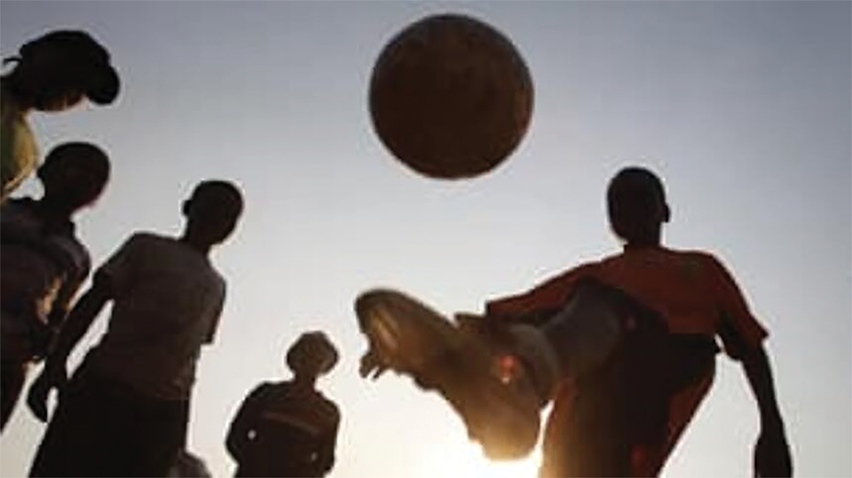
For generations, the public school was football’s great leveller. A child did not need a wealthy parent, a private academy or a family capable of paying for transport, kit and coaching to get onto a school team and into regular competition. Wednesday afternoon could be enough. A fixture against another school could be enough. A good performance could put a child’s name into the path of somebody looking for players.
It was not glamorous, but it was a pathway, and importantly, it was a pathway that did not begin with a family’s bank balance.
That pathway has been badly damaged. Fewer than 10 per cent of South African public schools now maintain organised sports programmes linked to national governing structures, while regular school competition has all but disappeared in many parts of the country.
The consequences are particularly severe in township and rural schools, where equipment, safe playing fields, coaching and transport are often already in short supply. Football has not left these communities. The organised opportunity to develop footballers has.
And this did not happen because children suddenly decided they preferred something else. It happened because adults dismantled, neglected and failed to replace parts of the structure that was supposed to carry the game forward.
In 2015, control of school football was placed under the South African Football Association after a protracted dispute with the South African Schools Football Association. SAFA promised a streamlined national league connected to the professional development pathway. Instead, much of school football was left trying to find its way through an operational vacuum.
The old fixture calendar, which gave school football its rhythm, has largely disappeared. Pitches are left unmaintained, fencing is an afterthought where it exists at all, and changing facilities are frequently inadequate.
Then there is the less glamorous killer of school sport: getting children from one place to another. For a poorly funded school, rising transport costs can be enough to make an away fixture impossible. This means withdrawing from competition and losing another opportunity for players to develop.
The irony is difficult to miss. We are perfectly capable of celebrating sporting excellence once it has arrived, complete with sponsors, cameras and national excitement, but the boring work that produces that excellence is treated as though somebody else will take care of it.
In under-resourced schools, where academic demands are already pressing hard, sport is increasingly regarded as something that can be sacrificed when resources and time run short.
That is a serious mistake. For many children, particularly in communities where safe recreational space is limited, school sport is not some pleasant little extra added to education if there is enough money left over.
It provides discipline, fitness, teamwork and a constructive place to spend time. It also gives children something harder to measure but no less important: the possibility that their ability might take them somewhere.
Outside the school system, the picture is hardly more reassuring. Academies, clubs and provincial structures do not consistently operate as parts of one coherent development pathway. A talented Under-13 player in a rural area can therefore spend years playing football without being properly identified, monitored or moved through the stages needed to develop that ability. By the time somebody notices, those lost years cannot be retrieved.
Pitso Mosimane, confirmed by SAFA on 1 September 2026 as the new Bafana Bafana head coach, has repeatedly made the point that South Africa needs to get the basics and the progression right. Speaking in July 2024 during a visit to Curro Academy Parkdene in Boksburg, he argued that young players need to be taught according to their age and stage of development, with the youngest children learning through small-sided, enjoyable football before progressively moving into more sophisticated tactical work. His comparison with schooling was apt: nobody expects a child to advance through the grades without first learning the foundations.
AmaZulu FC president Sandile Zungu made essentially the same argument from the professional side of the game when he launched his campaign for the SAFA presidency in July 2026. He identified the revival of school football as fundamental to the future of the sport, alongside stronger women’s football, better governance and greater accountability. When people working at opposite ends of the game arrive at the same conclusion, perhaps it is time somebody in charge started listening.
The contradiction at the heart of South African football is therefore almost absurd. We have a country in which football is woven into everyday life, yet we have allowed the machinery for developing footballers to become increasingly inaccessible to the very communities where so much talent exists.
Then, when the national teams lack depth or technical consistency, we behave as though the players themselves have somehow failed us.
We have also developed an unhealthy fondness for the quick fix. Put a sponsor’s name on a tournament, gather schools for a weekend, bring in a few cameras and declare another victory for youth development. But a tournament is not a development system. No child becomes a technically accomplished footballer because they played three matches over a weekend.
Development requires weekly competition, proper coaching, tactical education and progression through age groups. It requires repetition, continuity and people who understand that improvement is built over years rather than announced on a stage.
If South Africa wants its footballing depth back, the answer is not mysterious. It needs a national schools calendar that gives public and private schools, urban and rural, regular competitive football.
It needs ring-fenced money for pitches, equipment, and subsidised transport, particularly for Quintile 1 to 3 schools. It needs teachers and community volunteers to have access to proper coaching accreditation, and it needs the Department of Basic Education, the Department of Sport, Arts and Culture and SAFA to decide who is responsible for what.
Most importantly, talent identification must begin before a promising child becomes another statistic lost between Under-13 and Under-17. A player should be followed through the development system because of ability, not because somebody’s parents can afford an academy.
Until we understand that development is a habit rather than an event, South African football will continue performing its strangest trick: producing endless enthusiasm for the game while failing to build enough of the footballers that enthusiasm deserves.
The children will keep playing because nobody needs to teach them to love football. What they need from the adults is a pathway that gives that love, and their talent, somewhere to go.