 WeeklySA_Admin
CHAOS: Coalition-led municipalities clash like untuned instruments, driven by ego and ambition while drowning out purpose and,leaving communities helpless…
By Themba Khumalo
Step into a concert hall, and the space feels ordinary. At first, there is no music, no sweep of beauty—just the quiet hum of people preparing, each absorbed in their own small rituals. Ordinary, focused, slightly restless people.
A violinist leans into their instrument, turning a peg with quiet precision. Somewhere behind them, a double bass lets out a low, awkward groan of a note. A flute chirps—too bright, too sharp—then stops. Someone tests a trumpet; it cuts through the air like a sudden burst of sunlight, almost rude in its confidence.
It is not music. Not yet. Each sound is isolated, almost selfish. A scale here. A fragment there. Notes repeated, corrected, abandoned. You hear effort. You hear uncertainty. You hear the human side of it—people trying to get it right. If you did not know better, you might think the room is on the verge of a clash, that these fragments will never align. And yet… this tension, this stubborn dissonance, is exactly where music begins to breathe.
Then the noise thickens. More instruments join the tuning, not in harmony, but in overlap. The violins stretch their notes thin and high, searching for pitch. The cellos join in with something deeper, but not quite aligned. Brass cuts in again—louder this time—testing power, filling space whether invited or not. The percussionist taps lightly, almost impatiently, as if reminding everyone that time exists, even if no one is keeping it.
It swells into something messy, crowded, almost argumentative. And yet—this is the part most people misunderstand—this chaos is not failure. It is honesty. It is what difference sounds like before it learns to listen.
Then, gently, almost unnoticed, a single note rises above the rest. Clear. Steady. Unwavering.
It is not louder than everything else, but it is certain. An A held long enough to be recognised, simple enough to be followed. It does not demand attention—it invites alignment.
One by one, the instruments begin to turn towards it.
The violins adjust first, their high notes bending, settling, softening into place. The woodwinds follow, their tones slipping into tune as if they have found something familiar to hold onto. Even the brass—so bold a moment ago—pulls back slightly, reshaping its sound to match that shared centre.
The noise does not disappear all at once. It fades, reluctantly at first, then willingly.
What replaces it is not silence, but readiness.
Now, when the conductor steps forward, the room feels held. No speech. No instruction. Just a raised hand, a breath drawn in unison — felt more than heard — and then… The first note. It does not explode into the room. It arrives.
A violin, soft as a thought you almost miss. It stretches a single line into the air—fragile, careful, alive. You can hear the bow against the string, that faint whisper beneath the note itself, like the sound of something remembering it exists.
For a moment, it stands alone. Then another violin joins—not identical, but close enough to feel like agreement. Then another. And another. The sound begins to gather, not by force, but by trust. It becomes a thread—thin at first, but unbroken.
Then the cellos. You do not just hear them — you feel them. A warmth spreads under the music, and suddenly the melody has footing.
The violas slip in between, unnoticed at first, but suddenly essential—filling the quiet spaces, stitching the sound together.
Now the music has shape. It breathes.
And just as you settle into that gentle rise, the woodwinds arrive.
A flute glides above the strings, light and clear, like a thought that arrives before you have fully woken. It does not compete—it floats. A clarinet answers, deeper, more rounded, like a voice telling a story just beneath the surface of everything else. There is a conversation now, subtle but alive, a back-and-forth that gives the music character.
You begin to realise—you are no longer listening to individual instruments. You are inside something shared.
Then, with quiet confidence, the brass enters. Not abruptly, not to dominate—but with presence. A horn swells from the middle of the sound, rich and full, like a horizon widening. Trumpets follow, bright and clear, adding colour, lifting the music higher. For a moment, it feels like everything might overflow—but it does not.
Because beneath it all, the strings hold steady. The woodwinds weave. The percussion, almost invisible until now, begins to pulse—soft, deliberate, like a heartbeat you suddenly become aware of.
The music grows. It does not rush—it builds. Layer upon layer, sound upon sound, each section leaning into the other, shaping, responding, supporting. The melody moves—not owned by one, but carried by all. It rises through the violins, deepens through the cellos, brightens through the brass, dances through the woodwinds.
And then it reaches you. Not as noise. Not as performance. But as a feeling. A swell that lifts in your chest before you can explain it. A tension that tightens, then releases. A moment where everything—every difference, every voice, every instrument—arrives together in perfect timing.
The peak. Full. Rich. Unapologetically alive.
And just when it feels like it cannot give any more, it changes.
The conductor lowers a hand. The brass softens, stepping back with quiet dignity. The woodwinds thin out, like mist lifting. The strings return to that delicate thread where it all began, but now it carries weight — the weight of everything that has passed through it.
The music exhales. One last note lingers—held just long enough to matter—then fades into a silence that is no longer empty.
It is full of what has just been shared.
And in that silence, something settles in you. Not because you understand every note. But because you felt the journey from chaos… to coherence… to something unmistakably whole.
That is the power of an orchestra. Not perfection or sameness. But difference, disciplined by listening, shaped by timing, and united by purpose—until it becomes something that can move people.
It is what becomes possible when many voices stop trying to be heard over each other… and start choosing, instead, to be heard together.
Then you step outside, into the reality of our municipalities. And the contrast is not subtle — it is jarring in the way that only silence, broken badly, can be.
Where the orchestra listens, our coalitions shout. Where the orchestra waits for its moment, our politicians scramble for the microphone as if silence might erase them. Where the orchestra builds something shared, our councillors tear each other apart.
What we are left with is not music. It is noise. Relentless, exhausting, self-inflicted noise.
Because let us be honest—brutally honest. The crisis in many of our local governments is no longer just about capacity or resources. It is about conduct.
A peculiar arrogance has taken root in coalition politics—one that mistakes disruption for strength, volume for leadership, and visibility for value. The need to be seen, to be quoted, to be credited has overtaken the far more important responsibility of making things work.
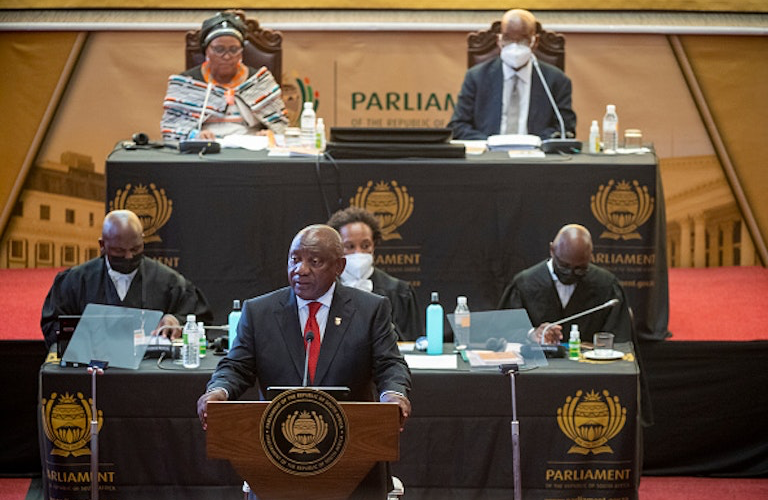
You see it in council chambers where motions are not debated, but ambushed. You also hear it in press briefings where every sentence is sharpened for attack, not clarity. You witness it in communities where basic services hang in the balance while political partners behave like rivals locked in a permanent audition for relevance.
Everyone wants to be the trumpet. Loud. Visible. Unignorable.
But no one wants to be the instrument that holds the note, that carries the rhythm, that does the quiet, unglamorous work of keeping the whole thing together. And so the performance collapses—not because there is a lack of talent, but because there is an abundance of ego.
Coalitions, in their current form, have become stages for petty theatre. Partners enter not with a shared score, but with sharpened knives. Agreements are treated as temporary inconveniences—useful only until the next opportunity to outmanoeuvre, embarrass, or dislodge the other.
The diversity of coalition partners—their different perspectives, their varied strengths—should be an advantage. It should produce something layered, resilient, and responsive. It should, if handled with maturity, sound like that orchestra at its best: complex, yes, but coherent. Different, but directed.
In that diversity, each must step back and ask: What does this moment require of me—not for my party, not for my profile, but for the functioning of this municipality?
Sometimes it requires you to lead. Sometimes it requires you to support. Sometimes—this seems particularly difficult—it requires you to be quiet.
To hold the note. To keep time. To allow another voice to carry the melody because it serves the whole.
But that demands something rare in our current political culture: a willingness to be part of something larger than oneself.
To take the noise of competing needs, limited resources, and difficult histories—and shape it into something that works. Something that delivers. Something that improves the daily lives of people who have neither the time nor the patience for political games.
That sound at the beginning — the chaos before the conductor raises the baton — it was never noise. It was potential. The tragedy of our coalitions is not that they cannot find the note. It is that they have stopped listening for it.